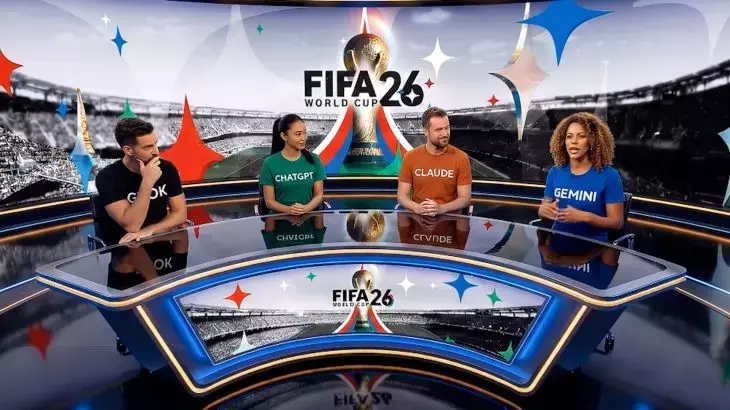
In anticipation of the 2026 FIFA World Cup, a fascinating experiment was conducted, involving leading artificial intelligence platforms to forecast the potential champion. This endeavor brought together Grok, ChatGPT, Claude, and Gemini, each offering their unique algorithmic insights into who might lift the coveted trophy. The results presented a diverse range of possibilities, underscoring the varying methodologies and data interpretations inherent in current AI technologies when applied to unpredictable human endeavors like sports.
The initiative aimed to explore the capabilities of these advanced AI systems in predicting a major global sporting event. Each model, operating on distinct architectures and training datasets, approached the prediction task from its own computational perspective. Grok, known for its real-time information processing, likely synthesized vast amounts of contemporary data, including team performance, player statistics, and recent match outcomes. ChatGPT, with its extensive language model, might have analyzed historical sports commentary, expert opinions, and past tournament trends. Claude and Gemini, representing other significant AI advancements, would have similarly employed sophisticated algorithms to weigh various factors, such as team dynamics, coaching strategies, and even external influences that could impact player performance.
The predictions from these four AI entities were not uniformly aligned, reflecting the inherent complexities and uncertainties of football. While some models might have favored traditional powerhouses based on historical success and current rankings, others could have identified emerging teams or dark horses through more nuanced data analysis. This divergence highlights the challenge of predicting future events, even for highly intelligent systems, and emphasizes the blend of quantitative data and qualitative factors that contribute to a team's success in a tournament of this magnitude.
The collective output from Grok, ChatGPT, Claude, and Gemini provides a captivating preliminary look at the 2026 World Cup landscape through the lens of artificial intelligence. Their diverse predictions not only offer an intriguing conversation starter for football enthusiasts but also serve as a valuable case study in the evolving field of AI-driven forecasting. The ultimate outcome of the tournament will, of course, reveal the accuracy of these technological insights, adding another layer to the ongoing dialogue about the intersection of AI and human endeavor.
