Earlier this year, the landscape of venture capital witnessed a significant shift. IVP general partner Tom Loverro boldly proclaimed that the post-pandemic downturn had come to an end, emphasizing the importance of prioritizing growth over cost-cutting for companies that had weathered the storm. However, Brian Hirsch from Tribeca Venture Partners pointed out that there are still thousands of companies struggling to secure the next round of financing at a higher valuation or even survive.
Unraveling the Divergence in Venture Capital
Post-Pandemic Downturn and Growth Priorities
This year, as the pandemic-induced economic turmoil began to subside, there was a sense of optimism among some in the venture capital world. Tom Loverro's assertion that the downturn was over signaled a shift towards growth-oriented strategies. Companies that had managed to survive the challenging times were now looking to expand and capitalize on the emerging opportunities. However, the reality for many others was far from optimistic. The struggle to raise funds at higher valuations remained a significant hurdle, as highlighted by Brian Hirsch's observations.Many companies, despite having shown resilience and progress, found themselves in a precarious position. The demand for capital was still high, but the willingness of investors to provide it at favorable terms was limited. This created a dichotomy between the companies that were able to thrive and those that were still fighting for survival.Investment Strategies of Tribeca Venture Partners
Tribeca Venture Partners, a 13-year-old firm with a late-stage strategy, has been playing a crucial role in this evolving landscape. Unlike conventional growth funds, Tribeca invests in companies that are forced to raise capital at valuations that are the same or lower than their previous prices. In many cases, existing investors are willing to support these companies with additional funding, but they require a third-party valuation to ensure the fairness of the deal. This approach has allowed Tribeca to identify opportunities in companies that might otherwise have been overlooked.For example, in situations where companies are facing challenges in raising funds, Tribeca's expertise in valuation and deal-making can provide the necessary support. By working closely with these companies, Tribeca helps them navigate the complex fundraising process and find solutions to their financial challenges.The Impact of AI on Valuations
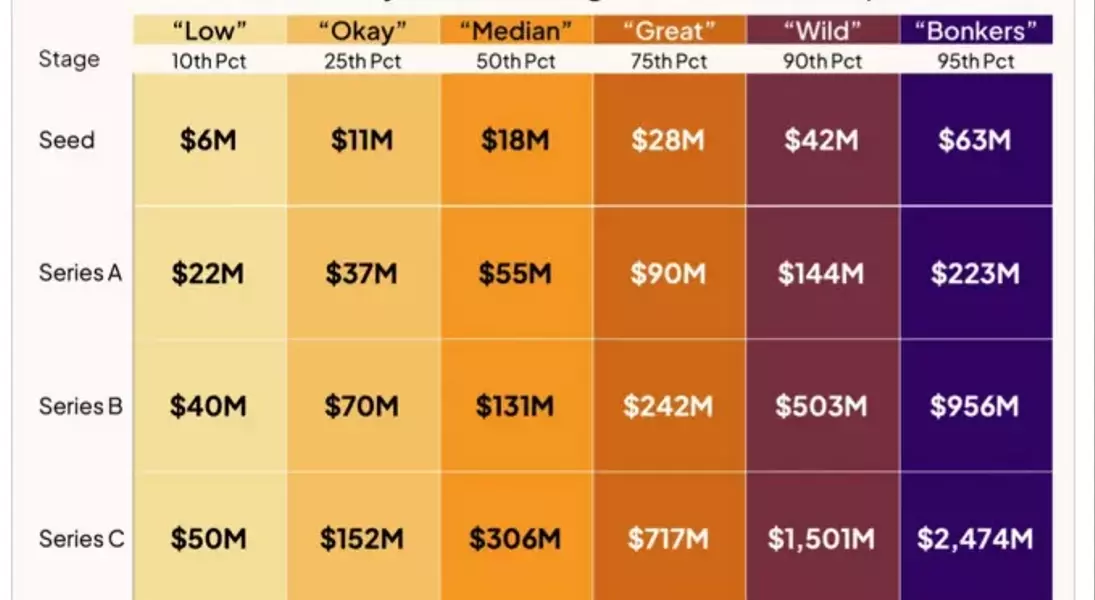
The latest valuation data from Carta clearly demonstrates the extent of the divide in the venture capital market. For companies at the upper end of the range, particularly those with a focus on AI, the valuations have been soaring. Notable examples like ElevenLabs, which raised a $920 million Series B with a pre-money valuation of $920 million, and Cohere, which closed its Series D at a $5 billion pre-money valuation, showcase the power of AI in driving up valuations.On the other hand, non-AI startups are facing a drastically different fundraising landscape. Even if they raised capital after the ZIRP-era frenzy subsided, securing Series B funding has become a challenging task, even with decent revenue growth. Founders of non-GenAI startups often feel left out, as if they were not invited to the "cool party" in high school. Carta's data reveals that only 9% of Series A companies have been able to secure Series B funding within two years, a significant decline from the previous 25%.Helping Mature Startups with Growth Funds
Tribeca Ventures is using its growth fund to address the issue of high valuations for more mature startups. These startups typically have revenues of $20 million or above and are growing at a decent pace. However, their valuations are often too high for the current market conditions. By helping to price down rounds for these companies, Tribeca is facilitating their growth and providing them with the necessary capital to continue expanding.This approach is part of the "unwinding process" that Hirsch mentioned. It is a recognition that the market is in a state of transition and that valuations need to adjust to reflect the new reality. Tribeca's role is to act as a bridge between these mature startups and the investors who are willing to provide capital at more reasonable terms.In conclusion, the post-pandemic venture capital landscape is a tale of two cities. While some companies are thriving in the era of AI and high valuations, others are struggling to survive. Tribeca Venture Partners is playing a vital role in this dynamic environment, helping companies navigate the challenges and find opportunities for growth.