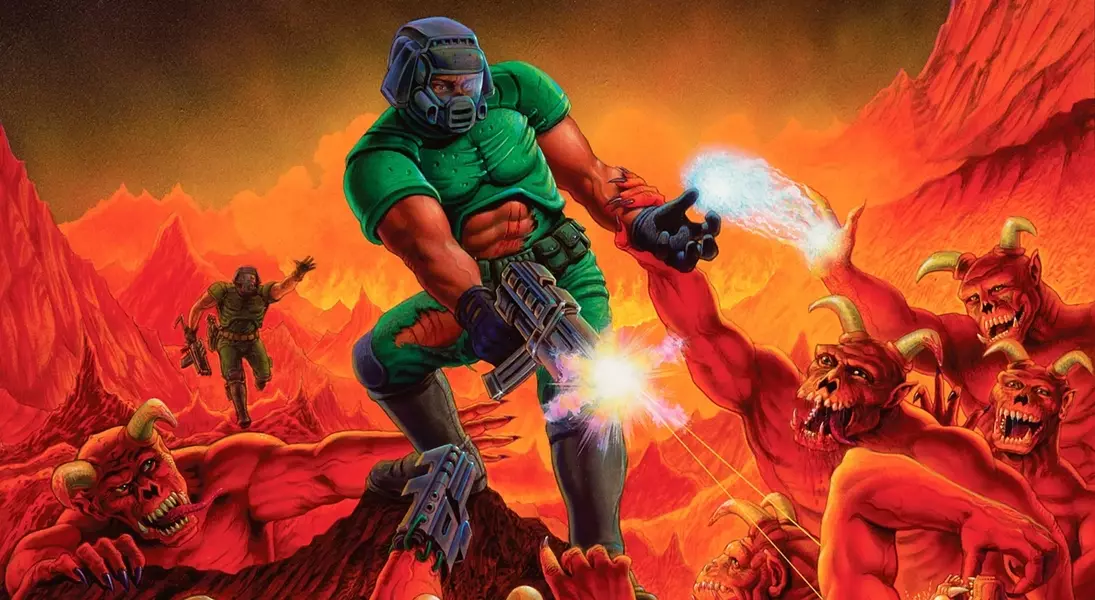
In a testament to human ingenuity and the boundless pursuit of creative vision, Adrian Carmack, a key figure in the founding of id Software and the principal artist behind the seminal 1993 game Doom, recently shed light on his unconventional animation process. During a conversation with Jesse Petrilla, Carmack disclosed that the intricate animations for Doom's various characters and weapons were crafted using what was then a highly rudimentary tool: the undo key within Deluxe Paint. This revelation highlights the innovative spirit required to overcome technological limitations in the nascent stages of game development, akin to ancient civilizations constructing monumental structures with basic means.
Carmack's approach was born out of necessity, as sophisticated animation software was non-existent in the early 90s. He ingeniously exploited the undo and redo functionalities of Deluxe Paint to cycle through individual frames, effectively creating a makeshift animation loop. This method allowed him to meticulously refine each frame, despite strict limitations on the number of frames he could use. The development team was reportedly astonished by his innovative technique, a testament to his resourcefulness in achieving compelling visual effects with minimal assets. He acknowledged the inherent risks of this process, such as accidentally losing work, but emphasized that a careful, systematic workflow significantly mitigated these dangers.
Carmack's pioneering animation technique for Doom stands as a powerful illustration of how constrained resources can fuel extraordinary innovation. His story not only offers a fascinating glimpse into the early days of game design but also inspires a broader understanding of creativity in the face of adversity. It reminds us that often, the most remarkable achievements stem from ingenious solutions to seemingly insurmountable challenges, pushing the boundaries of what is thought possible.
