This analysis delves into a direct comparison between two prominent compact performance vehicles: the 2026 Acura Integra Type S and the 2026 Volkswagen Golf R. The discussion evaluates various aspects, including their design aesthetics, interior functionalities, powertrain configurations, and overall driving experiences. A key focus is the contrast between the Integra's manual transmission and driver-centric approach versus the Golf R's dual-clutch automatic transmission and swift performance. This detailed examination aims to discern which model ultimately provides a more satisfying and engaging experience for enthusiasts.
Manual vs. Automatic: The Ultimate Compact Performance Showdown
The Contenders: Unveiling the 2026 Acura Integra Type S and Volkswagen Golf R
The relentless pursuit of speed and record-breaking lap times has often led to the gradual disappearance of manual transmissions in high-performance automobiles, replaced by rapid-fire dual-clutch automatics. While this evolution has undeniably created faster machines, offering ample material for manufacturers' marketing efforts, the profound satisfaction derived from a perfectly executed manual shift remains unparalleled. In this context, we brought together two exceptional compact performance cars: the Acura Integra Type S, a celebrated enthusiast's choice for its manual gearbox, and the Volkswagen Golf R, a long-standing hot-hatch icon that has recently transitioned to an automatic-only offering, to assess the true essence of driving pleasure.
Pricing and Configurations: A Closer Look at Both Models
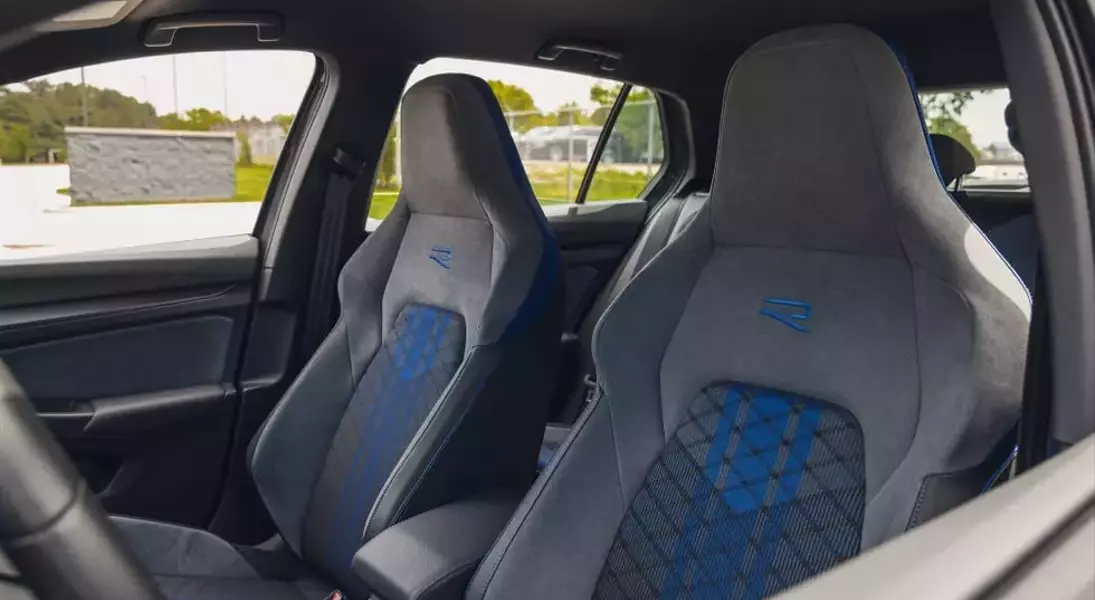
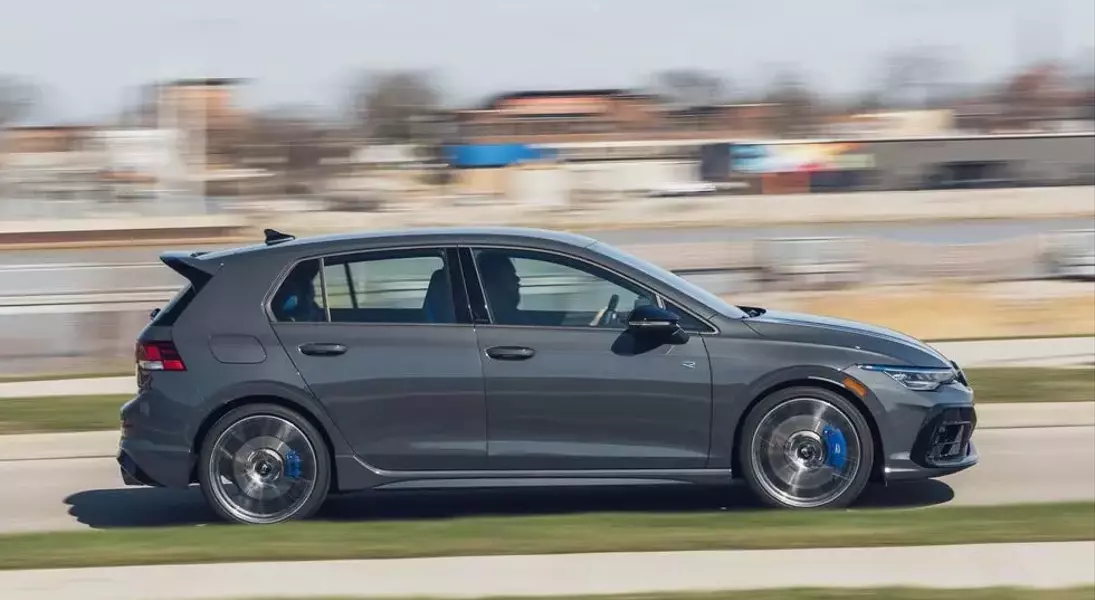
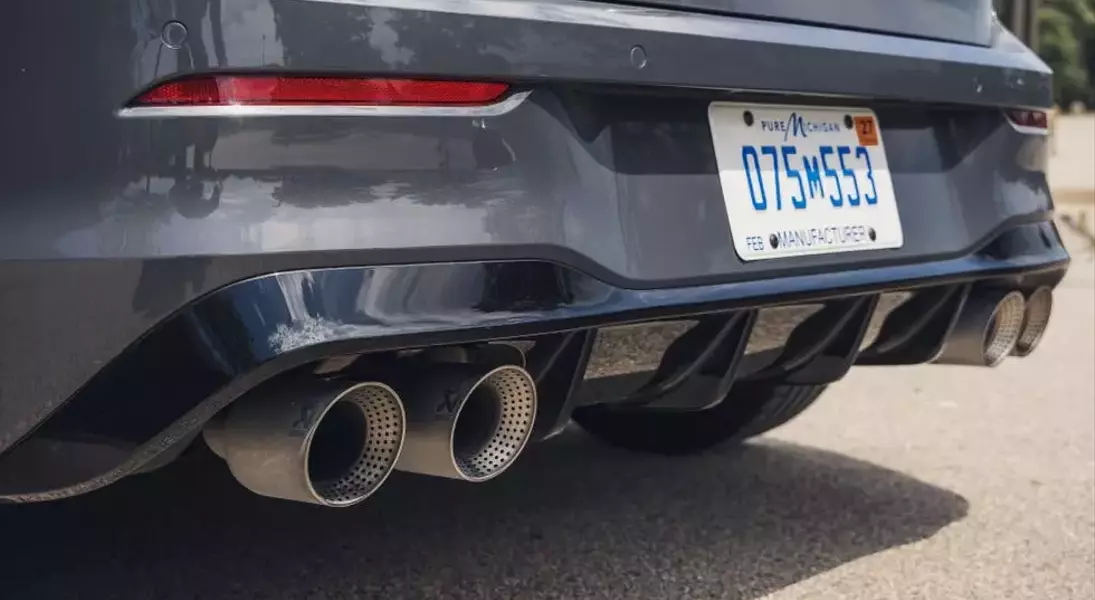
While the standard Integra models received a range of enhancements for the 2026 model year, including updated interior materials, fresh color options, and a new body kit for the A-Spec trim, the performance-oriented Type S, sharing much of its DNA with the Honda Civic Type R, largely carried over without significant changes. The Type S is offered in a single, generously equipped trim level. Our test vehicle, featuring the optional Urban Gray Pearl paint for an additional $600, retailed at $55,795. Similarly, the 2026 Volkswagen Golf R, which we subjected to a long-term review, also comes in a singular trim. The Golf R's Graphite Gray paint added $455. Its distinctive Euro Style package, priced at $3795, reduced weight by removing the sunroof, front-seat ventilation, and full power adjustment for the driver's seat (though seatback tilt remained electric). This package also included a titanium Akrapovič exhaust, diamond-patterned cloth seats, and padded door panels, bringing the Golf R's total price to $54,980.
Exterior and Interior Design: A Tale of Two Hatchbacks
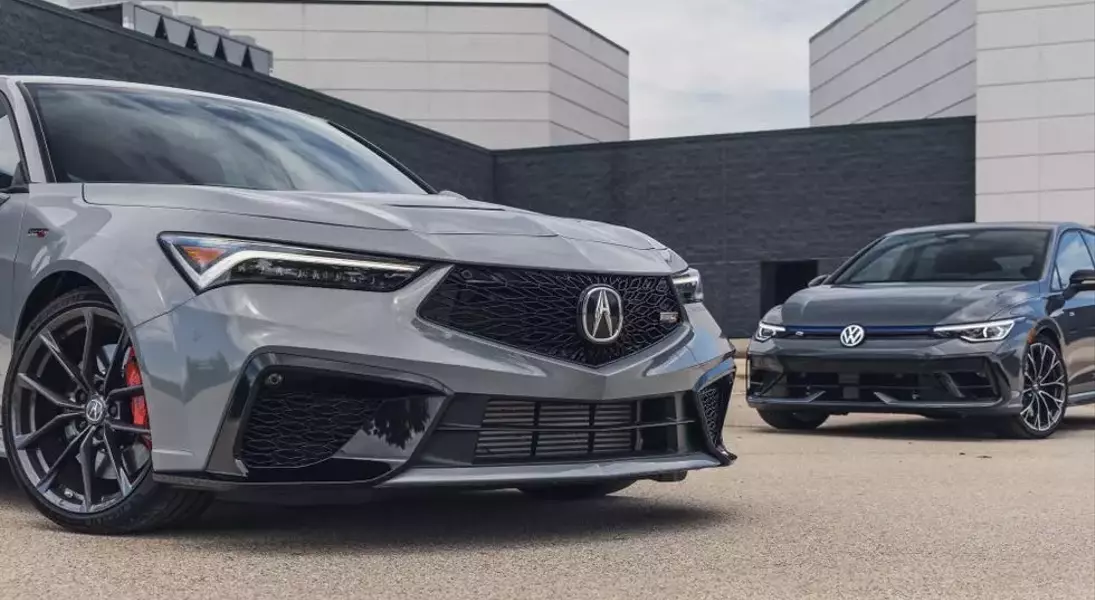
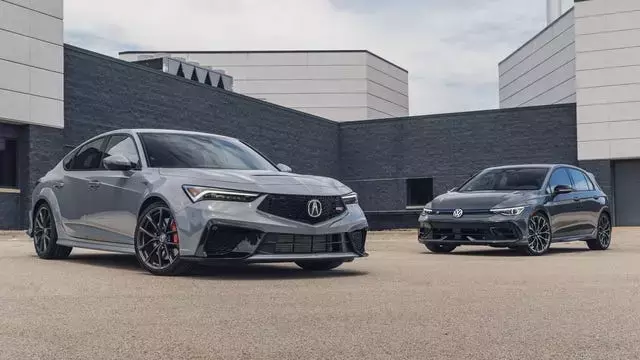
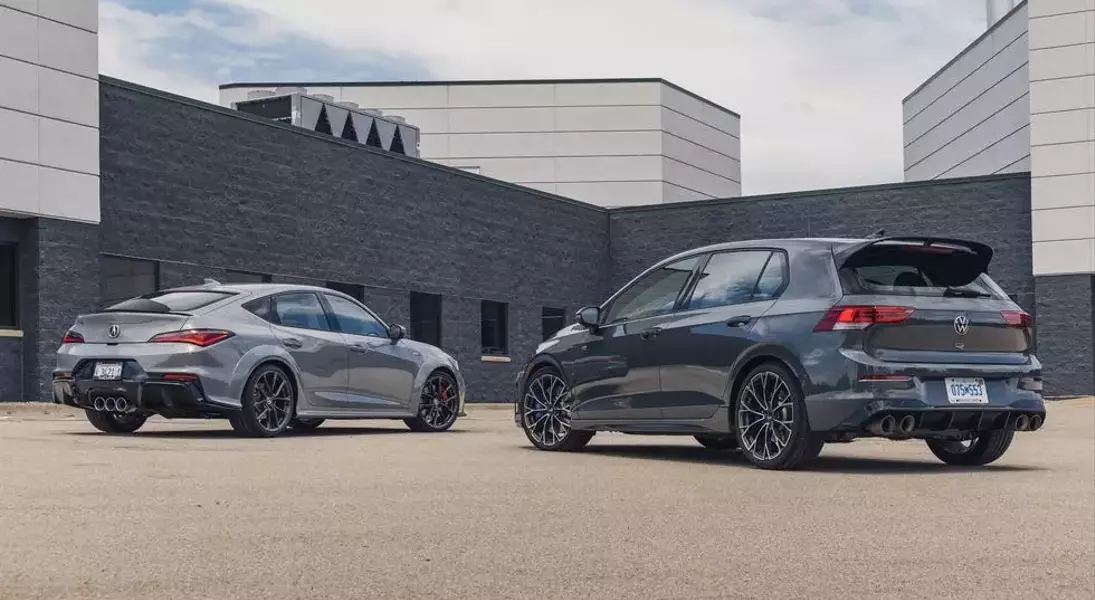
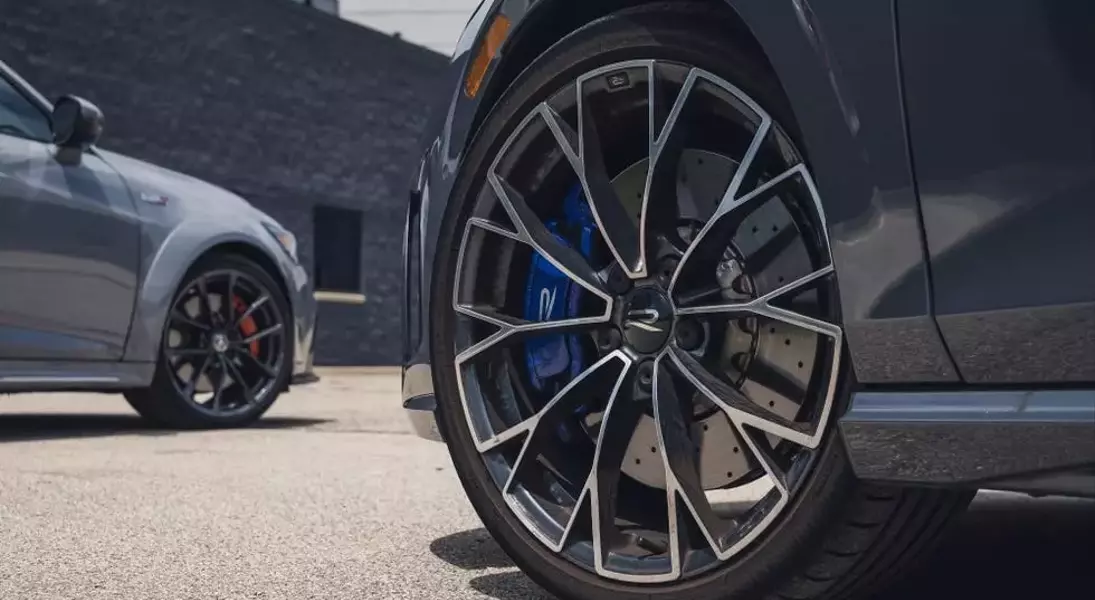
Despite both vehicles being hatchbacks, their visual presentations differ significantly. The Integra's gracefully sloped roofline gives it a more refined, almost sedan-like profile, lending it a distinctly premium and mature aesthetic. Its design is characterized by sharp lines, striking LED headlights, pronounced wheel arches, and an intricate diamond-pattern grille, all contributing to a more luxurious and performance-oriented appearance compared to the Golf R. The Golf, while a visually appealing compact, possesses a more understated design that tends to blend into its surroundings next to the more assertive Acura.
A practical consequence of the Acura's sleek roofline is a slight reduction in cargo versatility, making it less accommodating for taller items. Nevertheless, both the Golf R and the Type S offer identical cargo capacity with the rear seats upright, each accommodating five carry-on-sized boxes. When the rear seats are folded down, the Acura slightly surpasses the Volkswagen, stowing 18 boxes compared to the Golf's 17. However, the Integra's aggressive roofline results in 1.7 inches less rear headroom than the Golf R.
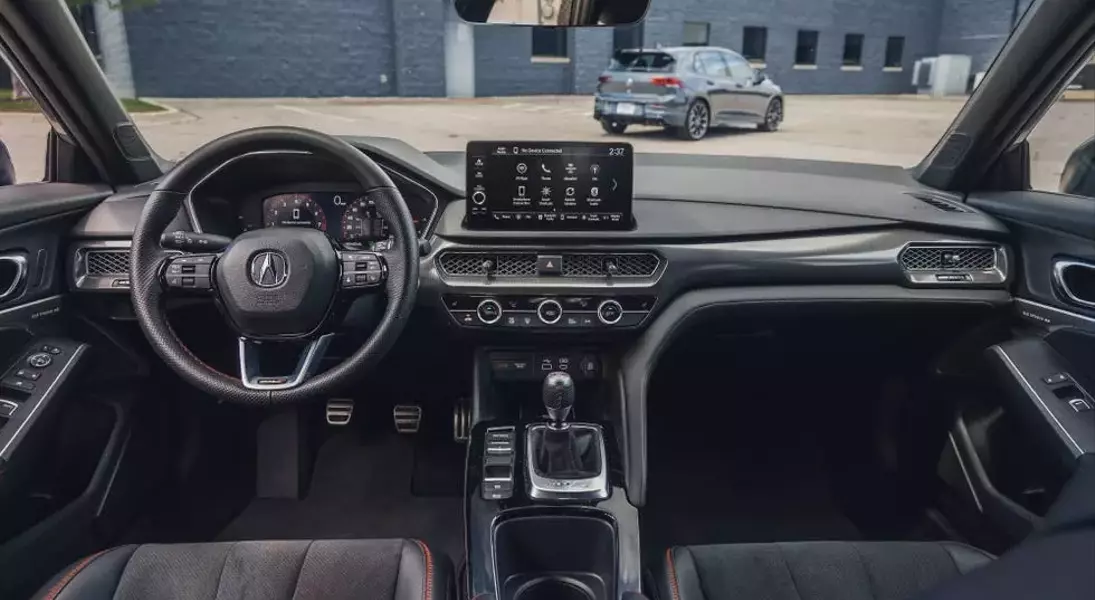
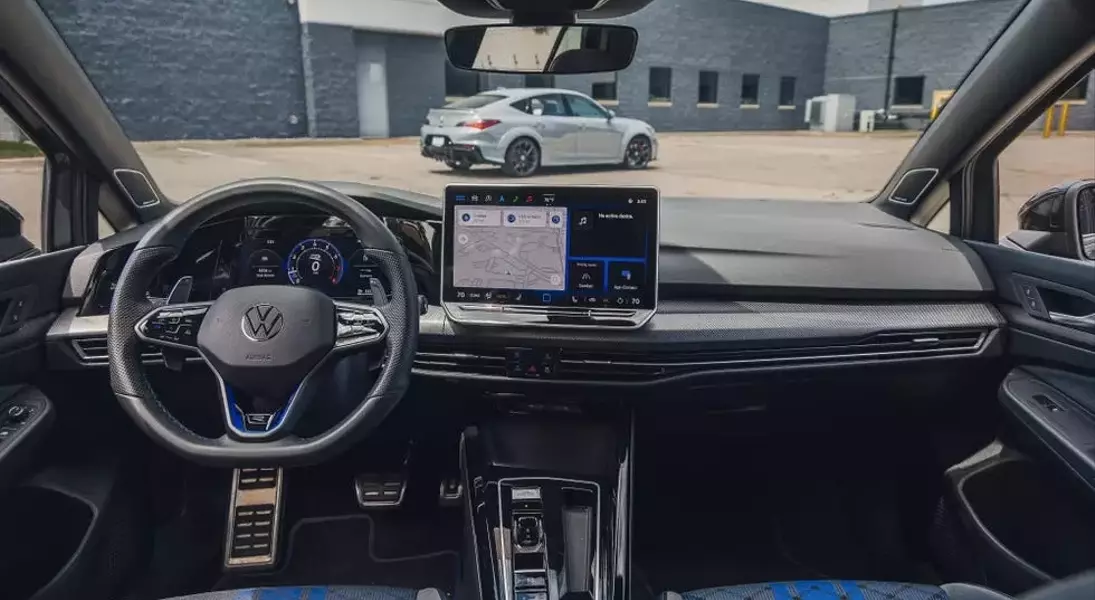
While some critics might point to the Integra's dashboard sharing design cues with the more affordable Civic, we view this commonality as a positive. In an automotive landscape increasingly dominated by oversized digital displays, the Integra steadfastly retains tactile physical controls. It features three rotary dials for climate adjustment, a volume knob, and numerous other buttons on the center console and steering wheel, providing an intuitive and easily adjustable interface while driving. The 9.0-inch central touchscreen still offers ample display area. In stark contrast, the Golf R suffers from an overreliance on touchscreen controls. Most functions are managed via its 12.9-inch display, with many other operations relegated to touch-capacitive buttons, which can be frustrating due to their lack of haptic feedback. Notably, while the Golf GTI has reverted to physical steering wheel buttons, the Golf R has not.
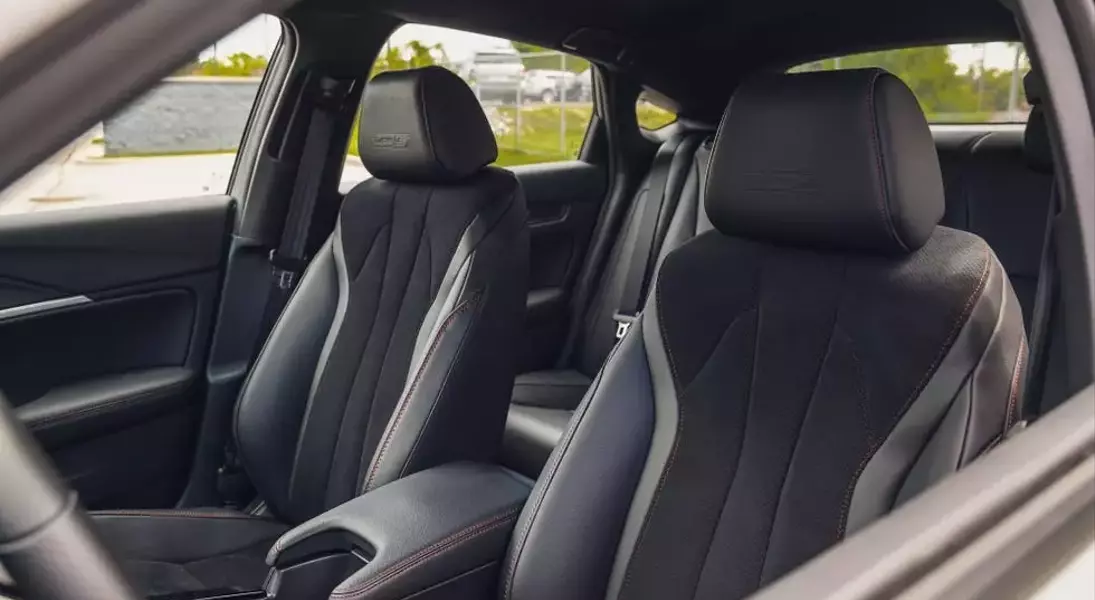
Both vehicles boast well-appointed interiors, though the Golf R's Euro Style package surprisingly detracts from its cabin appeal. Each car provides comfortable and supportive driver's seats with ample bolstering; however, only the Acura's offers full power adjustability. Both models feature heated seats, but neither offers ventilation, an area where the Golf could have gained an advantage if not for its specific package. Conversely, the Golf provides three-zone climate control, allowing rear passengers to customize their temperature, and heated outboard rear seats, features absent in the Integra.
Powertrain and Performance: A Clash of Drivetrain Philosophies
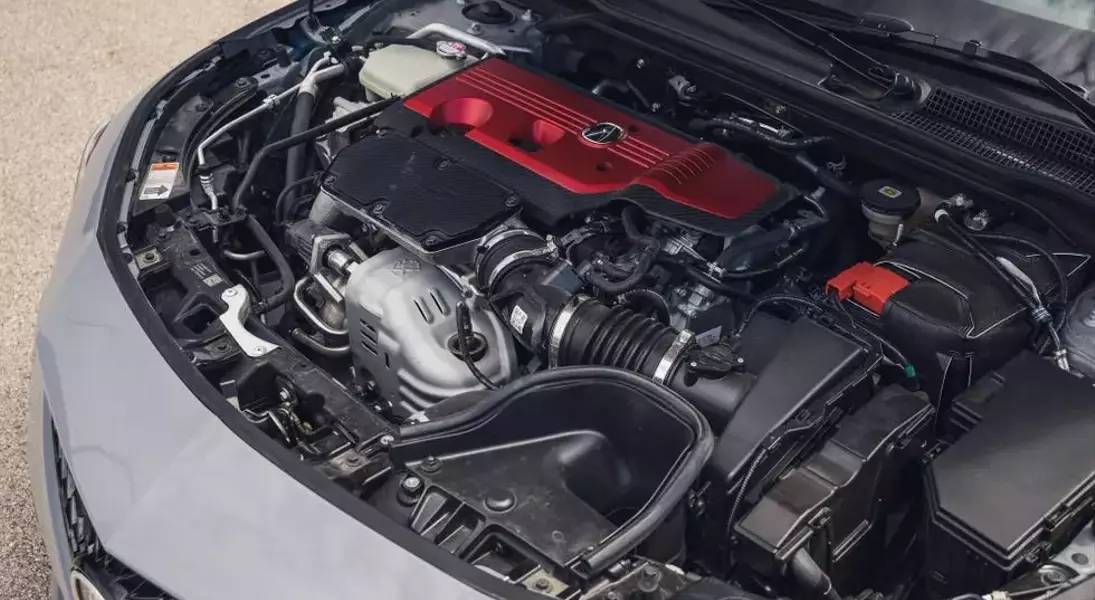
Beneath the hood, both the Integra Type S and the Golf R are propelled by turbocharged 2.0-liter inline-four engines. The Acura's powerplant generates 320 horsepower and 310 pound-feet of torque, channeled exclusively to the front wheels via a limited-slip differential. The Volkswagen's engine, meanwhile, produces 328 horsepower and 295 pound-feet of torque, distributed to all four wheels, further enhanced by a torque-vectoring rear differential.
Historically, Volkswagen offered the Golf R with a six-speed manual transmission, but this option was discontinued for 2025, making the seven-speed dual-clutch automatic transmission the sole choice. Acura, on the other hand, upholds the time-honored tradition of manual shifting, offering the Integra Type S exclusively with a six-speed manual gearbox.
Acura Integra Type S: The Enthusiast's Manual Choice
The Acura's manual transmission provides a significantly more engaging driving experience, a point we will elaborate on shortly. However, the combination of a manual gearbox and front-wheel drive places the Integra at a disadvantage against the Golf R on the test track. The Integra required 5.1 seconds to accelerate from 0 to 60 mph, lagging 1.2 seconds behind the Golf. This performance gap widens at higher speeds, with the Golf R reaching 100 mph in 10.1 seconds, while the Acura trailed by 2.6 seconds. The Golf R completed the quarter-mile in 12.5 seconds at 111 mph, whereas the Integra crossed the line in 13.8 seconds at 104 mph. In the 5-to-60 mph rolling start test, designed to simulate real-world driving conditions more accurately, the Acura performed more competitively, trailing the Volkswagen by only 0.8 seconds. In other performance metrics, the Golf R and Integra Type S demonstrate remarkable parity. The Volkswagen needed 152 feet to stop from 70 mph, with the Acura requiring just one foot more. From 100 mph, the braking distance difference was a mere six feet. Both hot hatches also achieved identical skidpad results of 0.99 g.
Driving Experience: Distinct Personalities on the Road
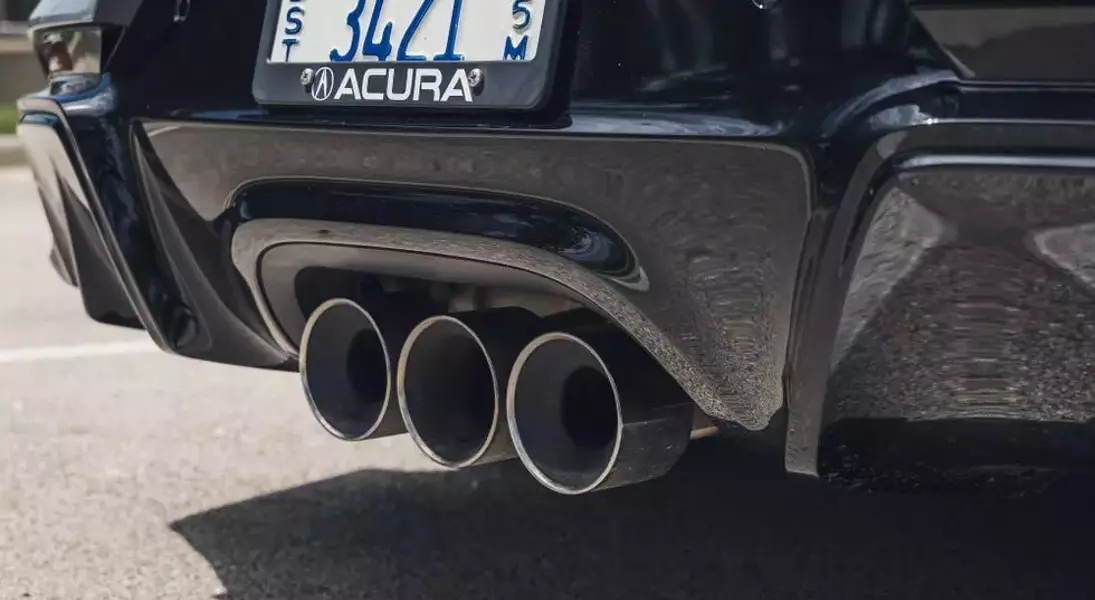
Despite both vehicles employing turbocharged 2.0-liter four-cylinder engines with comparable power outputs, the Integra Type S and Golf R offer starkly different driving experiences due to their contrasting transmissions and drivetrain layouts. The Integra's driving appeal largely centers on its six-speed manual transmission, a true delight to operate. The gear throws are short, precise, and accompanied by a satisfying click upon engagement. With peak torque arriving at a low 2600 rpm, downshifting for overtaking on the highway isn't strictly necessary, but the sheer pleasure of the shift action makes it irresistible. Furthermore, in Sport and Sport Plus modes, the exhaust emits a thrilling burble with each downshift, occasionally punctuated by an exhilarating crackle.
Volkswagen Golf R: Speed and Agility with Automated Precision
In the Golf R, the dual-clutch automatic transmission delivers rapid upshifts and eagerly downshifts in Sport and Race modes. This automatic gearbox, combined with its all-wheel-drive system, contributes to a noticeably more spirited feel behind the wheel, allowing the Golf to consistently outperform the Integra in acceleration tests. However, the transmission can feel hesitant upon releasing the brakes, and shifts at lower speeds can be clunky, a contrast to the Integra where any clumsiness in shifting is attributable solely to driver input. On winding roads, the Integra reveals surprising handling prowess for a front-wheel-drive vehicle, thanks to its dual-axis strut front suspension that optimizes grip from the Michelin Pilot Sport 4S tires. The Type S remains composed and stable through corners, with the front end confidently engaging as the car turns in, and the surge of torque propelling it out of the turn. While there's some torque steer, especially when accelerating hard out of tight corners, the steering itself is commendably weighty and direct, though Sport+ mode can feel excessively heavy at lower speeds.
The Integra's adaptive dampers further enhance its versatility. In Sport mode, the ride is firm but not harsh, while Sport+ mode is better suited for track use or regions with consistently warm weather, as it can feel overly stiff on uneven surfaces. Switching to Comfort mode transforms the Integra into a compliant daily driver, although highway speeds can bring a noticeable amount of tire noise. Interestingly, despite the Golf R weighing approximately 150 pounds more than the Integra, it feels more nimble. Its steering, while not as heavy as the Acura's, is exquisitely weighted, offering excellent feedback that builds progressively. The steering feels natural and fluid, though it can be a bit light and vague on-center in Comfort mode.
The Golf R's superb steering perfectly complements its agile chassis, with the all-wheel-drive system and torque-vectoring differential expertly distributing power to help the car rotate through corners at high speeds. Compared to the Acura, the Golf R feels lighter on its feet, likely a benefit of its shorter wheelbase. Thanks to its adaptive dampers, the ride quality is quite refined, absorbing significant bumps while maintaining composure on twisty roads.
The Verdict: Passion vs. Pragmatism
Choosing between these two exceptional vehicles is a difficult decision. Both offer exhilarating performance on winding roads and sufficient practicality for daily commuting. While the Golf R is objectively faster and feels more agile through corners, the Acura is far from sluggish and provides a more profoundly rewarding experience thanks to its outstanding manual transmission. The Golf R is an incredibly capable compact rocket, but Acura's unwavering commitment to the manual gearbox elevates the Integra to a true driver's car. Ultimately, speed isn't the sole measure of enjoyment. In an era of hyper-performance machines, the Integra Type S feels refreshingly authentic, offering performance that truly engages the driver through direct physical interaction. With its elegant exterior and an interior focused on intuitive usability rather than an excessive reliance on screens, the Integra Type S emerges as the preferred sporty compact for enthusiasts seeking a truly connected driving experience.
