
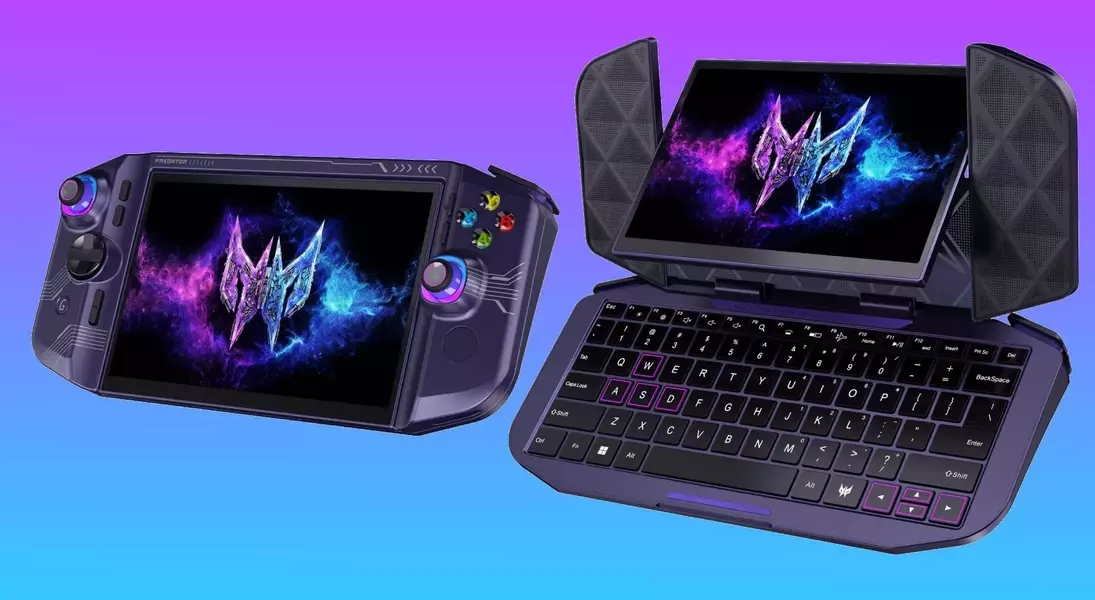
Acer recently showcased an intriguing vision for the future of portable gaming with its Project DualPlay Mini. This innovative concept, a gaming handheld capable of transforming into a laptop, captivated audiences at IFA 2026 in Berlin. Despite its exciting potential, it remains uncertain whether this dual-functionality device will ever be mass-produced. However, Acer also announced the imminent release of a more compact yet robust gaming handheld, the Predator Atlas 7, building on the foundation of its larger predecessor, the Atlas 8.
Acer's Vision for Gaming Portability: From Concept to Reality
At the prestigious IFA 2026 event in Berlin, technology giant Acer presented its ambitious Project DualPlay Mini, a gaming device designed to seamlessly transition between a handheld console and a portable computer. This visionary prototype aims to redefine the capabilities of mobile gaming hardware by integrating both entertainment and productivity functions into a single, adaptable unit. According to Acer, the concept sought to explore new possibilities for the gaming handheld form factor, envisioning a device that serves both as a dedicated gaming platform and a versatile mobile workstation.
While the Project DualPlay Mini remains a concept, potentially never reaching store shelves, Acer confirmed the upcoming launch of a widely available product: the Predator Atlas 7. This new addition to Acer's gaming portfolio is essentially a more streamlined iteration of the existing Predator Atlas 8 handheld. It boasts a vibrant 7-inch touchscreen with a smooth 120 Hz refresh rate and a peak brightness of 500 nits, ensuring an immersive visual experience. Powering this compact device are an Intel Arc B390 graphics solution and an Intel Arc G3 Extreme processor, providing substantial gaming performance within a smaller footprint. Furthermore, the Atlas 7 is equipped with an 80Whr battery for extended play sessions. Acer has also incorporated its advanced Predator AeroBlade cooling system, featuring both plastic and ultra-thin metal fans with 89 blades each, designed to significantly enhance airflow by up to 10% and maintain optimal operating temperatures.
The Predator Atlas 7 is slated for release in the winter of 2026. While an official price point has not yet been disclosed, industry observers anticipate it will fall within a similar range to its larger sibling, the Predator Atlas 8, which currently costs between $1,300 and $2,000. Given that the Atlas 7 will support up to 24 GB of LPDDR5x memory, its pricing is expected to reflect the ongoing challenges in memory supply. Though the concept of the Project DualPlay Mini offers a glimpse into an exciting, flexible future for portable gaming, the practicalities of durability for a flippable screen might temper widespread adoption, making its current status as a concept understandable.
Acer's latest announcements highlight a fascinating divergence in the handheld gaming PC market: the exploration of innovative, albeit unreleased, concepts versus the introduction of powerful, albeit expensive, commercial products. The Project DualPlay Mini, with its transformative capabilities, inspires thought about future device integration, though its long-term viability might be questioned due to mechanical complexities. Meanwhile, the Predator Atlas 7, while representing a step forward in compact gaming performance, underscores the persistent issue of high costs in specialized hardware. Both demonstrate Acer's commitment to pushing boundaries in the portable gaming sector, whether through groundbreaking ideas or refined, high-performance offerings.
