This article explores the growing trend of mothers adopting highly specific identities on social media, such as "Girl Mom" or "One-and-Done Mom." It delves into the societal and digital forces driving this fragmentation of the maternal role, examining how these labels serve as a means of self-definition, community building, and even a response to the pressures of modern life.
Embrace Your Maternal Niche: Unpacking the Digital Definition of Motherhood
The Allure of the "One-and-Done" Trend: Redefining Maternal Elegance
Observing social media trends, particularly on platforms like TikTok, reveals a fascinating shift towards specialized maternal declarations. Take, for instance, the "one-and-done" mother: elegantly poised women are often portrayed enjoying refined dining experiences, accompanied by their single, equally stylish child. This portrayal suggests a lifestyle of effortless chic, where a sole offspring is seen as an enhancement rather than a demanding responsibility.
From Professional Achievements to Maternal Titles: A Shifting Paradigm of Self-Introduction
In stark contrast to such curated images, many mothers juggle multiple children, finding their lives to be a whirlwind of logistical challenges rather than a display of effortless grace. There's a noticeable evolution in how women, especially those of a certain generation, choose to introduce themselves. Accomplished professionals are increasingly leading with their maternal status, highlighting their role as a mother before their career successes or personal pursuits. This represents a significant departure from previous eras where motherhood was often downplayed in professional settings.
Generational Shifts and the Re-evaluation of Motherhood's Role
This evolving perception of motherhood is, in part, a consequence of generational shifts. For women who came of age during the #girlboss era, embracing a maternal identity within a professional context was often seen as a hindrance to career advancement. The prevailing sentiment was to conceal the demands of parenting to prove an unyielding work ethic. However, the current landscape suggests a pendulum swing, where acknowledging the complexities of motherhood has become a badge of honor, even a form of quiet assertion in professional environments.
The Strategic Proclamation of Maternal Identity: Navigating Modern Life's Demands
Indeed, for many, like a writer balancing a demanding career with three young children, openly declaring their maternal role isn't merely an identifier. It's a subtle but powerful way to convey the immense organizational prowess and resilience required to manage a chaotic personal life alongside professional obligations. It's a bid for recognition, an unspoken request for appreciation for the constant, multifaceted challenges they navigate daily.
Beyond the Girlboss: Motherhood as a New Arena for Ambition and Hustle
Experts note that for those disillusioned by the relentless pursuit of career success inherent in "girlboss feminism," motherhood offers an alternative framework for identity. The same drive and ambition that once fueled professional endeavors are now channeled into crafting a meticulously organized home or a specific parenting style. Motherhood provides a tangible, socially celebrated structure where women can direct their energy and ambition, offering a sense of control amidst the uncertainties of the modern world.
The Hardest Job: Motherhood in a Multifaceted Professional Landscape
It's a widely acknowledged truth that motherhood presents some of life's most formidable challenges. In a world characterized by economic instability and constant change, many individuals find themselves juggling numerous roles. For a mother, integrating her maternal identity into her professional presentation isn't just about disclosure; it's a testament to the extraordinary capacity to manage an intricate array of responsibilities simultaneously.
The Atomization of Motherhood: A Modern Phenomenon of Subgroups
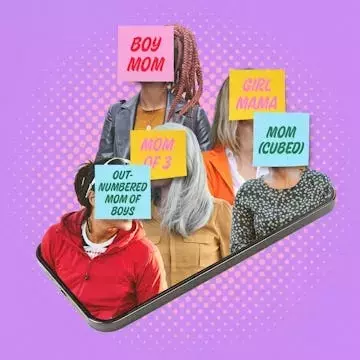
The recent past has witnessed an unprecedented fragmentation of the general "mom" label into countless specialized subgroups. What was once a singular identity has now atomized into distinct categories such as "boy moms," "girl moms," "one-and-done moms," "moms of three," and "moms of multiples." This trend is evident in the proliferation of merchandise featuring these niche titles, each implying a unique set of characteristics, aesthetics, and even a moral code.
Defining Yourself: The Implicit Questions Behind Maternal Labels
These specific maternal labels, while seemingly trivial, implicitly address a fundamental question that mothers often ask themselves and each other: "What kind of mother am I?" or, perhaps more accurately, "What kind of mother do I aspire to be?" In an increasingly scrutinized digital landscape, where maternal policing is rampant, these labels offer a means for mothers to carve out a specific identity, finding community and validation within their chosen subgroup.
The Digital Scrutiny of Motherhood: From Niche to Viral Content
In the digital age, achieving viral status often hinges on cultivating a hyper-specific talent or dominating a narrow niche. For mothers, this phenomenon is amplified, given the constant scrutiny they face in society. The creation of specialized maternal identities, such as "boy mom" or "mom of three," can be seen as a direct response to this intense public gaze, a way to define oneself and find solidarity within a like-minded community, particularly in contrast to the comparatively less scrutinized role of fathers.
Curated Motherhood: Children as Accessories in a Socially Styled Life
Online, aspirational images often depict motherhood as a carefully curated aesthetic, with children presented as accessories that reflect a mother's taste, style, and personality. Viral videos, like the one contrasting a "Girl Mom" with a "Boy Mom," further exemplify this trend, portraying idealized versions of maternal life that often bear little resemblance to reality. This performative aspect of online motherhood underscores the pressure to conform to certain images, even if it means overlooking the messy, unpredictable realities of raising children.
Finding Your Pack: The "Magnet Theory" of Online Maternal Communities
This phenomenon can be understood through what some term the "magnet theory." In a crowded online environment, individuals seek out "magnets" – commonalities that draw people together. Niche maternal identities, whether it's being a "boy mom" or a "twin mom," serve as these magnets, facilitating connections around shared experiences. It's a way to cut through the digital noise, to find one's "pack," and to gain a sense of belonging and validation in a world that often feels isolated. Ultimately, if these labels make the complex journey of motherhood a little easier to navigate, who are we to judge?
