The Radiological Society of North America is hosting its highly anticipated annual meeting in the vibrant city of Chicago this week. This gathering brings together a diverse community of clinicians and tech professionals from around the world, creating a platform for the sharing of innovative ideas and the showcase of the latest advancements in the radiology field. Year after year, the exhibit hall becomes a bustling hub, with hundreds of companies, ranging from small AI startups to large medtech incumbents, all vying for attention. On Tuesday, I had the opportunity to visit one of these prominent medtech companies, GE HealthCare, to gain deeper insights into its announcements and new products at this year's show.
Unveiling Radiology's Future at the RSNA Annual Meeting
New SPECT/CT Machine by GE HealthCare
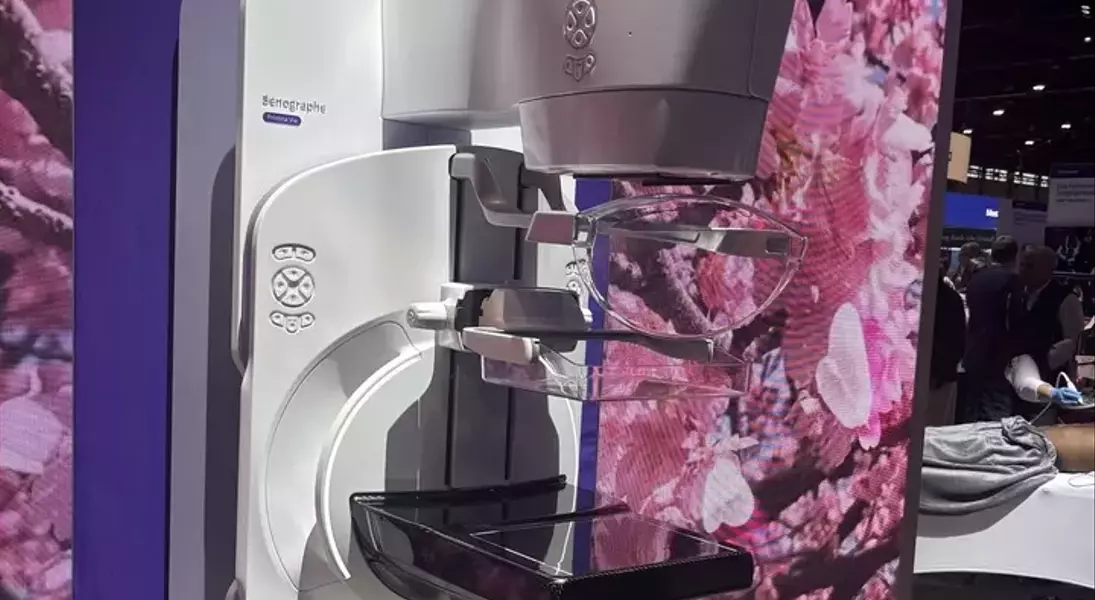
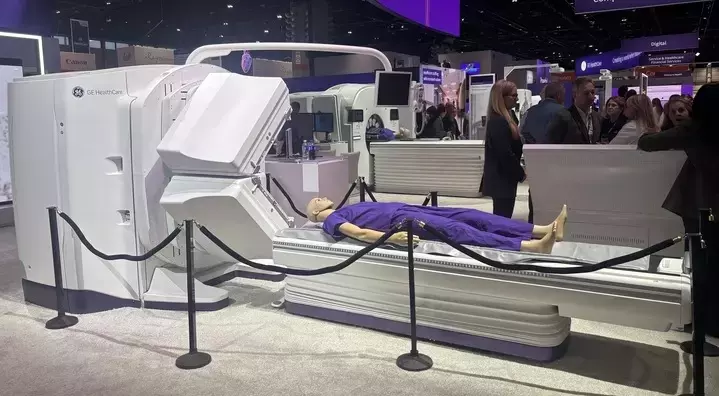
GE HealthCare has recently unveiled its remarkable new dual head SPECT/CT machine known as Aurora. This cutting-edge device is specifically designed to expand the range of CT procedures available for patients, aiming to enhance diagnostic accuracy. By combining functional imaging from single-photon emission computed tomography (SPECT) with anatomical details from standard computed tomography (CT) imaging, Aurora holds great promise. Erdogan Cesmeli, the chief strategy, marketing, and commercial officer for GE HealthCare's molecular imaging and CT division, emphasized that Aurora helps clinicians capture both functional and anatomical details of diseases such as cancer and cardiac disorders, which rely on precise localization and early detection. Additionally, the machine offers significant patient comfort with up to 40mm detector coverage and a 75 cm-wide bore, ensuring a more pleasant scanning experience during high-speed scans. Cesmeli also noted that Aurora is equipped with advanced technology for faster rotation speeds and reduced radiation doses. GE claims that the machine can decrease radiation doses by up to 25% without compromising lesion detectability. Currently, Aurora is approved and available for sale in the European Union, but the FDA has not yet given its approval.Another remarkable innovation from GE HealthCare is the Pristina Via, a new version of their Pristina mammography system. This new machine addresses the growing global shortage of radiologic technologists by automating tasks and streamlining workflows. Laura Hernandez, the chief marketing officer for GE HealthCare's women's health & X-ray division, shared that the system was designed with the input of mammography technologists to address their pain points. The Pristina Via system is equipped with features for zero-click image acquisition, tools to accelerate the comparison of previous exams, and rapid image processing that eliminates wait times between exposures. Hernandez also mentioned that any existing Pristina device can be upgraded to Pristina Via, providing added value to existing users.
The acquisition of Nihon Medi-Physics by GE HealthCare is another significant development. GE announced plans to purchase the remaining 50% stake from its parent company, Sumitomo Chemical. Nihon Medi-Physics is a Japanese company specializing in radiopharmaceuticals used in medical imaging and therapy. Its radiopharmaceuticals play a crucial role in imaging for cardiology, neurology, and oncology procedures. David Morris, the communications director for GE HealthCare's pharmaceutical diagnostics division, pointed out that Japan has the third-largest pharmaceutical market in the world after the U.S. and China and has the largest footprint of cyclotrons, which are essential for producing the radioactive isotopes needed to make radiopharmaceuticals.
