This article provides an in-depth look at the 1996 Bentley Azure, a high-end convertible. It explores its luxurious features, performance capabilities, and market positioning, offering insights from a 1995 perspective.
Experience Unrivaled Luxury: The Bentley Azure, Where Exclusivity Meets Open-Air Grandeur
Insights into the Elite Automotive Market and Bentley's Strategic Vision
A comprehensive study involving 2,000 Rolls-Royce and Bentley owners, both past and prospective, revealed compelling statistics about this exclusive demographic. A significant 40% of these individuals also possess yachts, while over half boast extensive collections of valuable art and maintain residences in multiple countries. On average, each owner commands a fleet of five high-value automobiles. This research underpinned Rolls-Royce's strategic decisions, particularly during the global tour of the Bentley Project Java concept car. While the smaller convertible concept garnered positive feedback, the company ultimately chose to develop a new convertible based on existing, more substantial platforms. This initiative, known as Project P100, culminated in the creation of the Bentley Azure, with the ambitious goal of establishing it as the world's premier convertible.
The Bentley Azure: A Fusion of Power and Refinement
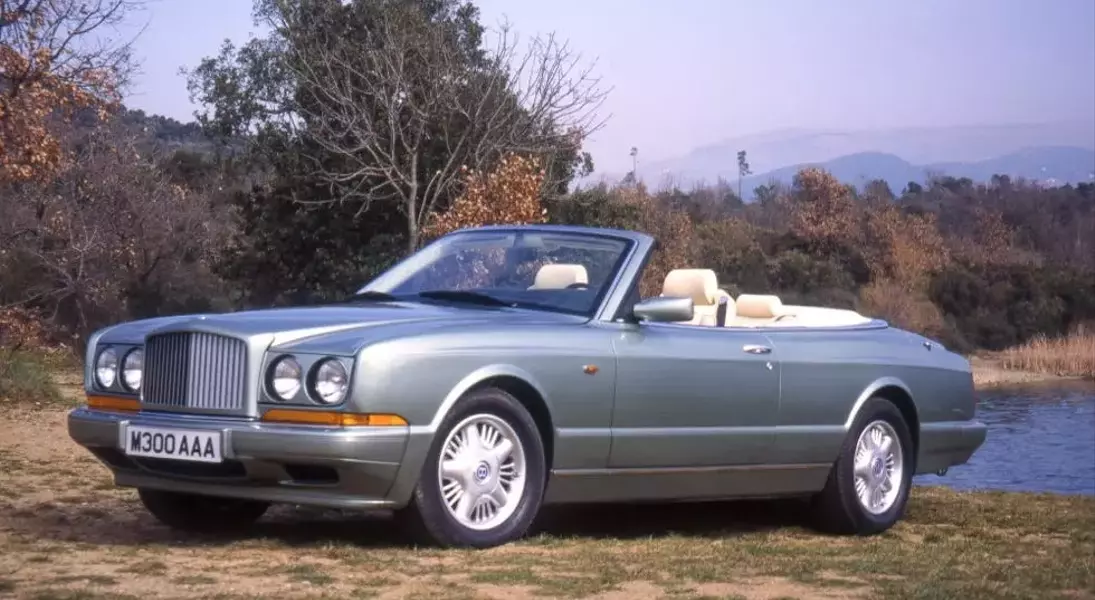
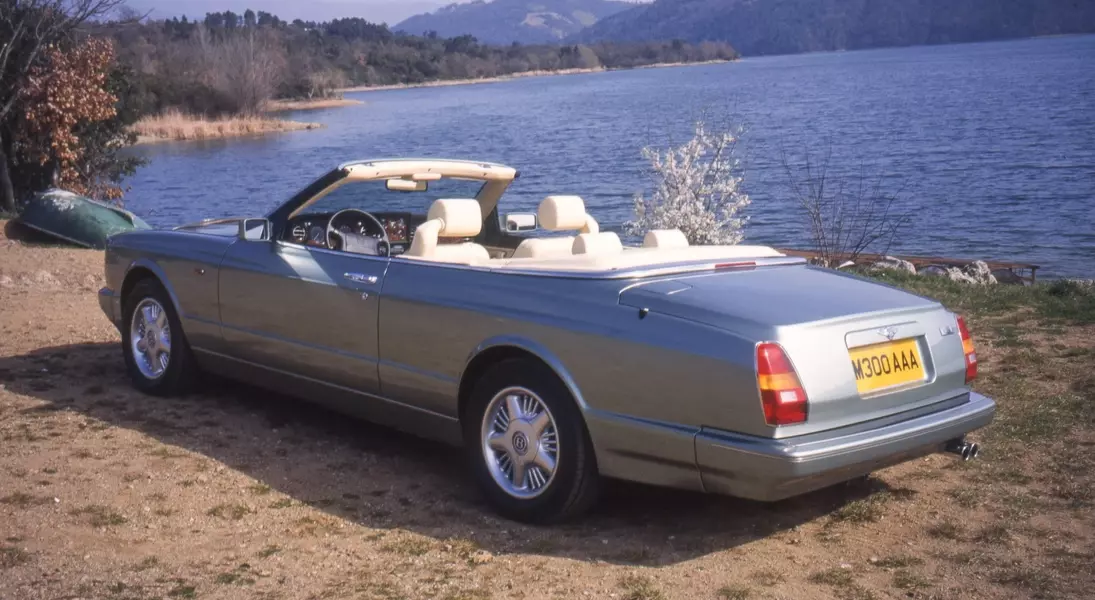
The Bentley Azure emerges as a soft-top iteration of the distinguished Bentley Continental R. Its turbocharged 6.7-liter engine has undergone significant upgrades, featuring an advanced water-to-air intercooler and sophisticated engine-management electronics. To compensate for the absence of a fixed roof, the body shell has been meticulously reinforced. The design and construction of the innovative retractable roof system were entrusted to the renowned Italian coachbuilder Pininfarina, echoing their previous collaboration on the Cadillac Allante.
Addressing Structural Integrity: Azure's Advanced Design Compared to Predecessors
Previous Rolls-Royce convertibles, such as the Corniche (also, at times, branded as a Bentley Continental), suffered from structural flexibility due to their coachbuilt nature, particularly problematic after the T-series Rolls and Bentley saloons were phased out in 1980. The Corniche, with its final production run concluding just prior to the Azure's debut, was notably criticized for its chassis's lack of rigidity. In contrast, the Azure incorporates extensive cross-bracing and floor-level stiffening to enhance its structural integrity. For enhanced safety, the A-pillars are reinforced for rollover protection, and the front seats, which are adapted from the BMW 850, feature integrated safety belts. Rolls-Royce engineers proudly assert that the Azure's static torsional rigidity surpasses that of the Corniche by 25%, resulting in a noticeably more robust on-road feel.
Performance Dynamics: A Blend of Comfort and Agility
While some minor body shudder may be perceived at lower speeds on uneven surfaces, it becomes imperceptible as the vehicle gains momentum. The suspension system has been carefully calibrated, combining new 255/55ZR-17 tires (the lowest profile ever used on a Rolls-Royce) with stiffer sidewalls, yet softer springs and thinner anti-roll bars. This, coupled with Rolls-Royce's adaptive damping system, endows the Bentley convertible with surprisingly agile handling. It effortlessly navigates fast highway curves, with the dampers adjusting to provide optimal stability, complemented by the precisely weighted and highly geared power steering.
Power and Prestige: The Azure's Commanding Presence
Despite its considerable weight of 5,750 pounds, comparable to a medium-sized truck, the Azure delivers impressive acceleration. Its top speed is electronically limited to 150 mph, a figure Rolls-Royce deems "adequate," and it is capable of accelerating from 0 to 60 mph in a mere 6.3 seconds. The early pre-production model driven for this review, lacking the most recent engine specifications, produced a "more than adequate" output of approximately 360 horsepower, akin to the Continental R. On the picturesque boulevards, highways, and mountain roads of southern France, the very region inspiring its name, the new Bentley exhibited ample power. This vehicle is not engineered for high-speed autobahn sprints or track racing – a quarter of Bentley owners already possess a Ferrari for such endeavors. Instead, its essence lies in providing a serene and unhurried journey, enveloping its occupants in unparalleled comfort and luxury; the Azure is unequivocally a car designed to be seen and to be experienced within.
Design Elements: The Craftsmanship Behind the Azure's Aesthetics
Style was paramount in the Azure's design philosophy. A critical design aspect involved seamlessly concealing the retractable roof beneath a flush metal cover on the rear deck. This stylistic choice, however, necessitated the use of a scratch-prone plastic rear window, a feature typically found in more utilitarian convertibles, rather than a glass one. The convertible system itself is a substantial, meticulously lined, and well-insulated structure, operating fully automatically at the mere touch of a button (labeled "hood" in British parlance), without requiring any manual latching or release.
A Glimpse into the Nuances of the Retractable Roof System
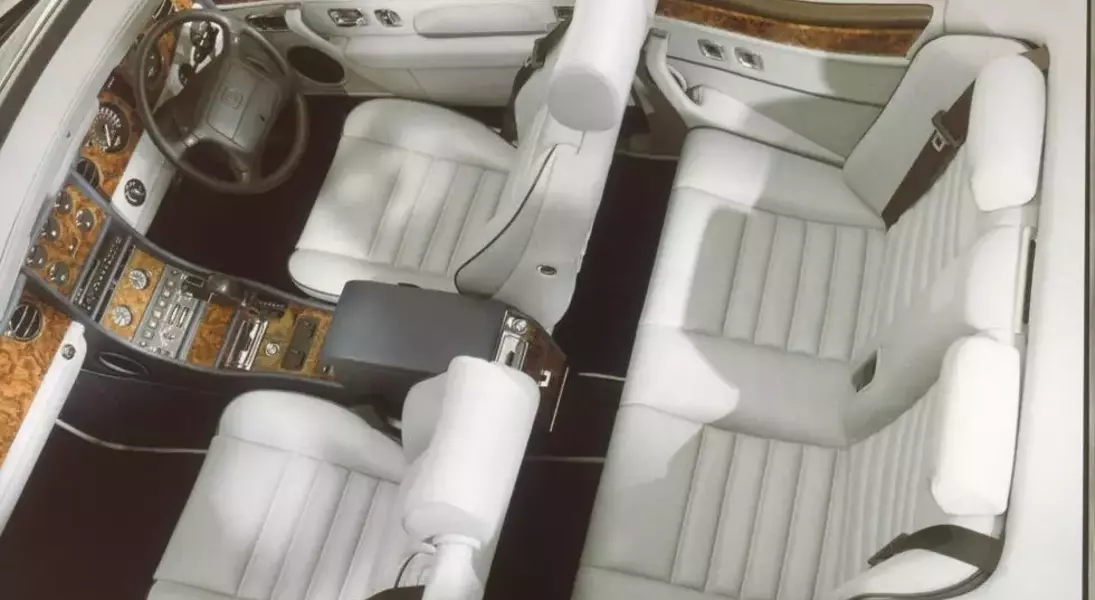
Despite extensive testing by Rolls-Royce and Pininfarina, involving 15,000 cycles – equivalent to three decades of operation – the electrohydraulic roof system unexpectedly malfunctioned during the preview drive. On the sole attempt to close it, the roof became partially stuck, refusing to either complete its retraction or open again. An apologetic Rolls-Royce technician manually completed the closure using a wrench, attributing the issue to a potential need for more sophisticated logic circuits in the roof's electronic control unit. Such an incident, if it occurred with a customer's vehicle, would undoubtedly diminish the sense of pride associated with owning an Azure. It is difficult to ascertain which scenario would be more frustrating: being unable to showcase the opulent wood-paneled interior, fine leather seating, and plush lambswool floor mats, or having all these luxuries, and one's expensive attire, drenched in an unexpected downpour.
Unmatched Exclusivity and Value Proposition
The Azure, with its body assembled, painted, and equipped by Pininfarina in Turin, demonstrates remarkable wind-sealing capabilities when the top is raised, especially considering the absence of window frames or central pillars. With the top down, the substantial windshield effectively shields front-seat occupants from significant buffeting, even with all side windows lowered; notably, air disturbance remains consistent at both 50 mph and 100 mph. Rear-seat passengers, while enjoying a narrower but equally spacious compartment as the Continental coupe, find greater comfort with the side windows raised, though they still experience a thrilling, wind-in-the-hair ride. With a price tag of $347,645 upon its August arrival in the U.S., which is $36,355 more than the Continental R, the Azure's cost is a testament to its exclusivity. Rolls-Royce confidently asserts that the Bentley Azure has no comparable rivals, with marketing director Ian McKay suggesting that the only alternatives are a private plane or a yacht – an assertion supported by the fact that 40% of Bentley owners already possess one of these. Here are the specifications:
