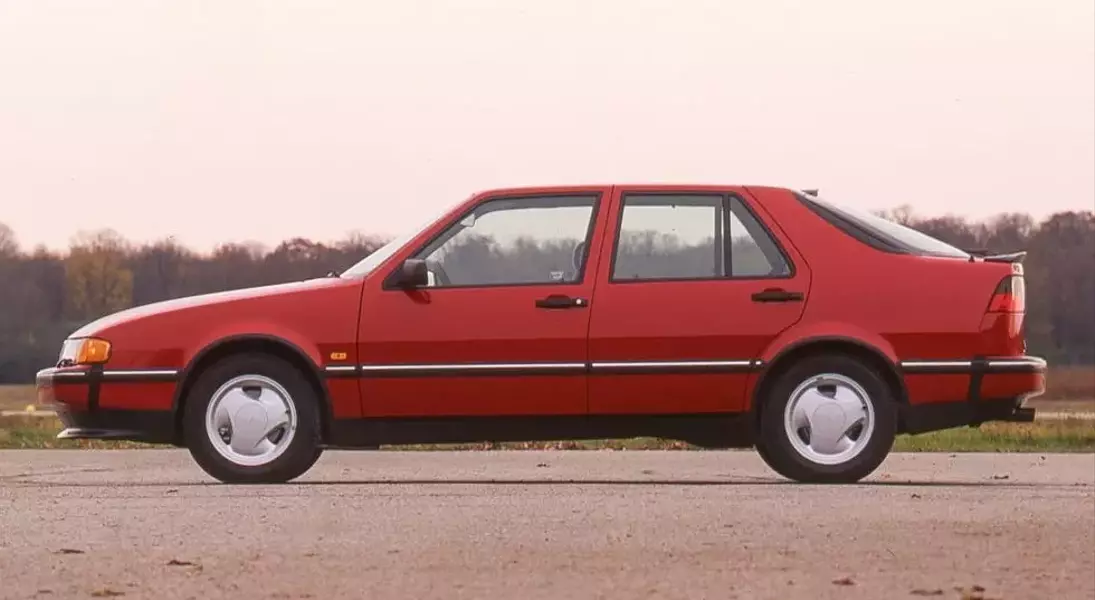
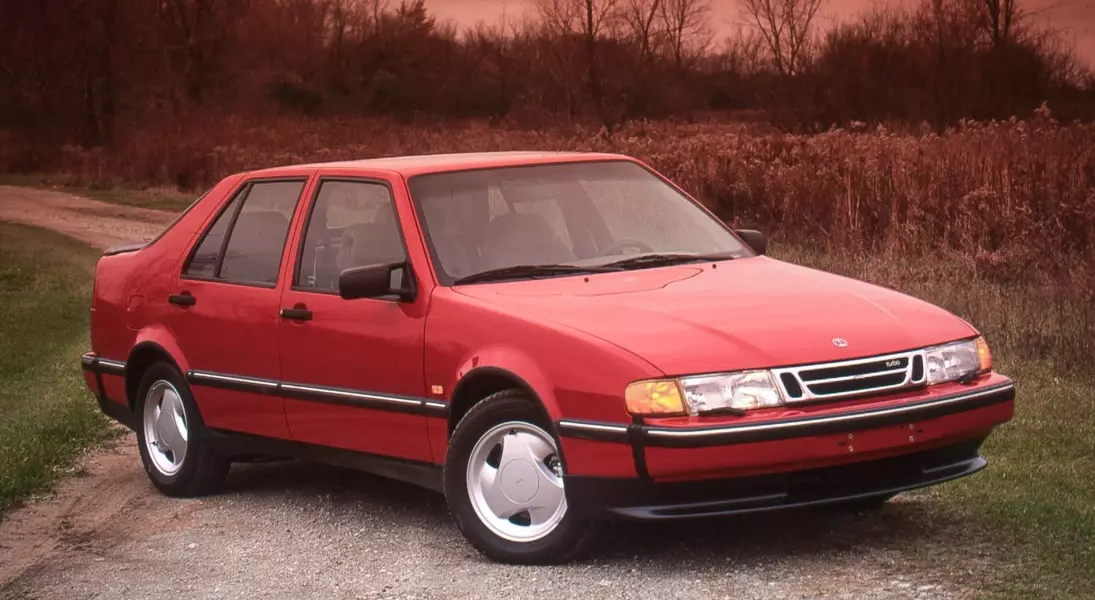
This review from February 1993 highlights the updated Saab 9000CS Turbo, focusing on its improved engineering, enhanced performance, and surprising affordability. It delves into the technical advancements in its engine and safety features, offering a detailed look at why this model stands out in its segment, especially in a value-conscious market.
Experience Swedish Engineering Excellence: Power, Comfort, and Value Redefined.
A Renewed Focus on Value and Performance in the Automotive Market
Even staunch proponents of domestic production would find the 1993 Saab 9000CS Turbo a noteworthy contender. While it's an imported vehicle, its financial contributions benefit General Motors' sales figures. In an era where fiscal responsibility is paramount, this car stands out for its efficient use of resources.
Significant Enhancements and a More Accessible Price Tag
Beyond its impressive structural upgrades, such as a 25 percent increase in torsional rigidity and a more aerodynamically refined front end that reduces lift by a similar margin, the 1993 model's pricing strategy is particularly appealing. Opting for the CS Turbo without a sunroof, leather interior, or power-adjustable seats brings the price down to $30,176. This makes it more economical than Saab's own 900 Turbo. Crucially, Saab's updated options policy allows the base 9000CS Turbo to be $7,000 less than the previous year's 9000 Turbo, all while maintaining its core luxurious qualities.
The Heart of the Beast: Advanced Engine Technology
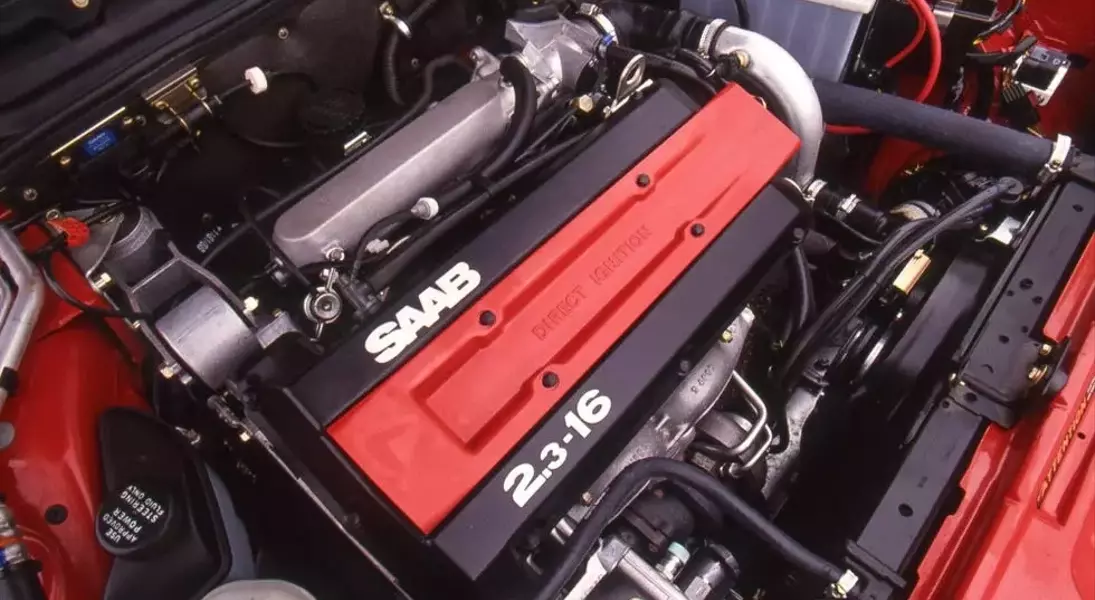
A central feature among the car's desirable attributes is its 2.3-liter turbocharged engine. This refined, balance-shaft-equipped powerplant now incorporates Saab's Trionic engine management system. This innovative system utilizes spark-plug electrodes to detect gas ionization in the combustion chamber between ignitions, enabling such precise engine control that traditional acoustic knock sensors are no longer necessary.
Balancing Power with Efficiency and Safety
With its integrated ignition, fuel injection, and turbo waste-gate controls managed by a 32-bit microprocessor, the 200-horsepower engine boasts improved fuel efficiency and reduced emissions. Interestingly, the car's 0-60 mph acceleration is slightly quicker than its predecessor (6.4 seconds vs. 6.8 seconds), attributed to a subtly taller final-drive ratio for 1993, rather than the minor weight increase from new rear-passenger rollover protection and enhanced side intrusion bracing. In fact, due to the deletion of certain options, our test car was actually lighter than the 9000 Turbo we evaluated in February 1991.
Responsive Acceleration and Advanced Traction Management
While the quarter-mile time of the new CS Turbo is slightly longer (15.3 seconds compared to 14.9 seconds), its taller final-drive ratio contributes to faster midrange acceleration, reaching 100 mph almost a full second quicker than the previous year's model. These statistics, however, don't fully convey the exhilarating sensation of speed on the open road. With substantial boost readily available even at 2000 rpm, rapid increases in speed are just a touch of the accelerator away. There's no distinct turbo whistle signaling acceleration; the car simply surges forward in response to throttle input. The boost activation is so immediate that the CS Turbo's standard traction control system, which works in conjunction with a redesigned front differential to significantly reduce wheelspin and torque steer common in earlier 9000 Turbos, is a welcome addition.
Subtle yet Effective Traction Control
The traction control not only prevents unsettling wheelspin and directional instability but also operates with remarkable subtlety. It intervenes gently when excessive throttle is applied, lightly braking the spinning wheel. At higher speeds, it simply reduces engine power. Unlike systems in some other vehicles, it avoids abrupt power cuts that can feel like a snapped throttle cable.
Uncompromised Luxury and Enhanced Safety Features
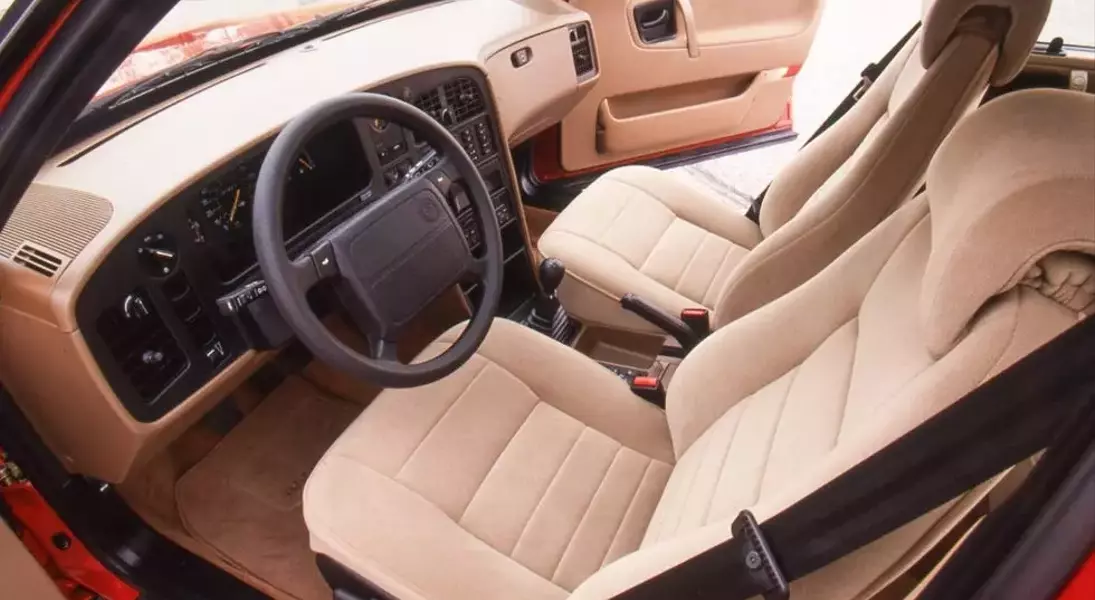
Indeed, one can still achieve a noticeable degree of wheel slip when accelerating from a standstill. A testament to its high-performance calibration is the mere 0.01 g deterioration in skidpad performance when the Traction Control System (TCS) was deactivated. And while a determined right foot can override it, the TCS remains appropriately sensitive in slippery conditions when paired with a gentle throttle. Thus, neither the powertrain nor the spacious interior were compromised by cost-cutting measures. The seating remains plush and supportive, even without leather upholstery or power adjustments, with standard power windows, locks, and mirrors. The automatic climate control, while occasionally exhibiting a "mind of its own" in overriding manual settings, is still a feature. Saab's refined rear-end redesign eliminated the rear three-quarter window, giving the car a more notchback appearance and enhancing rear-seat passenger protection. The hatch is as robust and silent as a traditional sedan's rear end. The added side protection, through sill, floor, and seat reinforcements, has also stiffened the entire vehicle, giving it a sense of isolation and tranquility almost comparable to a Lexus.
An Irresistible Proposition: Price and Features
Another valuable feature included in Saab's "stripper-level" CS Turbo is a theft alarm. Clearly, Saab has invested as much, if not more, into the car's enhancements as it has removed, making the new pricing structure all the more enticing. At $36,000, last year's 9000 Turbo faced stiff competition from serious V-6 and V-8 rivals. However, at a more accessible $30,176, the 1993 model presents a much more compelling argument. Yet, despite its rapid acceleration and smooth performance, some buyers in this segment might still perceive its four-cylinder engine as a significant drawback. As a prominent businessman once remarked, "It's as simple as that."
Refined Four-Cylinder Power: A Masterclass in Engine Smoothness
Saab truly offers valuable lessons to its parent company regarding the refinement of four-cylinder engines. Unlike the prevalent four-cylinder powerplants in the GM lineup, even the latest iteration of the Quad 4, which often produce a droning or howling sound at higher revolutions, this engine glides through its tachometer's range with exceptional grace. There's no clatter, no metallic clanks, and no overtly mechanical noises—just a symphony of precise operation. When you factor in the turbocharging and sixteen valves, even with a minor consideration for turbo lag, the Saab engine still stands as one of GM's finest. Hopefully, the rest of the company can draw inspiration from this exemplary design.
The Unsung Hero: Hatchback Versatility Meets Performance
In stark contrast to the global appreciation for hatchbacks, American car buyers tend to dismiss them as being cheap, despite their incredible practicality. Consequently, Saab remains one of the few manufacturers offering mid-to large-sized hatchbacks in the U.S., priced between $20,000 and $35,000, which is no small feat. However, selling 9000s this year will be considerably easier, thanks to the introduction of the high-performance, instant-boost turbo engine package without the excessive leather and luxury embellishments. Finally, suburbanites can transport 57 cubic feet of recyclables to 60 mph in 6.8 seconds for around $30,000. This development is sure to reignite American interest in the hatchback segment.
Questioning the Value: A Four-Cylinder in a Luxury Segment
In an era of inexpensive fuel, there's something about a four-cylinder engine in a $30,000 sedan that just doesn't sit right. It's like a paper umbrella in a fine scotch. The same sentiment applies to Porsche's potent 968 and my old Merkur XR4Ti, whose turbo lag I could measure in presidential election cycles. And I'm not alone in this observation. In our ten-car comparison of $30,000 sedans in September 1992, only one contestant was powered by a mere four pistons: a Saab 9000CD. While the turbo model accelerates to 60 mph quicker than any of the ten, the only thing faster would be me, choosing to invest my $30,000 in a BMW 325i instead.
