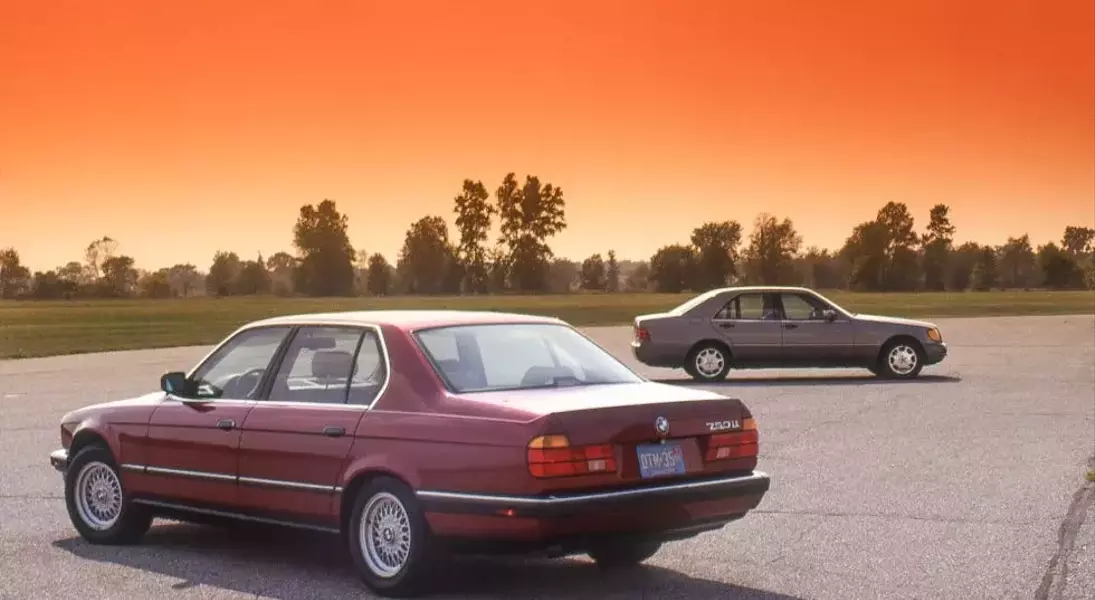
This comprehensive review from December 1991 delves into the Mercedes-Benz 400SE, a vehicle engineered to deliver an uncompromisingly luxurious automotive experience. The article meticulously details the car's advanced features, from spacious interiors and innovative seatbelt systems to remote-control door locks, all designed to enhance comfort, convenience, and safety. While acknowledging its substantial price and weight, the 400SE is praised for its serene ride and powerful V-8 engine, which offers impressive acceleration and a smooth driving dynamic. The review also includes a detailed comparison with the BMW 750iL, evaluating both luxury sedans on various criteria such as interior design, engine performance, handling, and overall value. Despite some criticisms regarding its weight and fuel consumption, the 400SE stands out as a top contender in the luxury car segment, offering a driving experience characterized by refinement and indulgence.
A Deep Dive into the 1991 Mercedes-Benz 400SE: Unrivaled Luxury and Engineering Excellence
In December 1991, the automotive world witnessed the introduction of the Mercedes-Benz 400SE, a vehicle designed with an unwavering commitment to luxury and advanced engineering. Mercedes-Benz engineers spared no effort in creating a car that epitomized automotive indulgence, as highlighted by numerous innovative features. Even the short-wheelbase model, which underwent testing, provided generous legroom and headroom for four passengers, underscoring its focus on comfort. The seatbelt retractors were ingeniously designed with dual springs, gently securing passengers while efficiently retracting the belts when unlatched. Power door closers further exemplified this dedication to refinement, either softly cinching doors shut or allowing for a more forceful close. For security, remote-control door locks utilized three distinct receivers and dynamically changed their infrared transmission codes with each use, a testament to Mercedes-Benz's forward-thinking security measures.
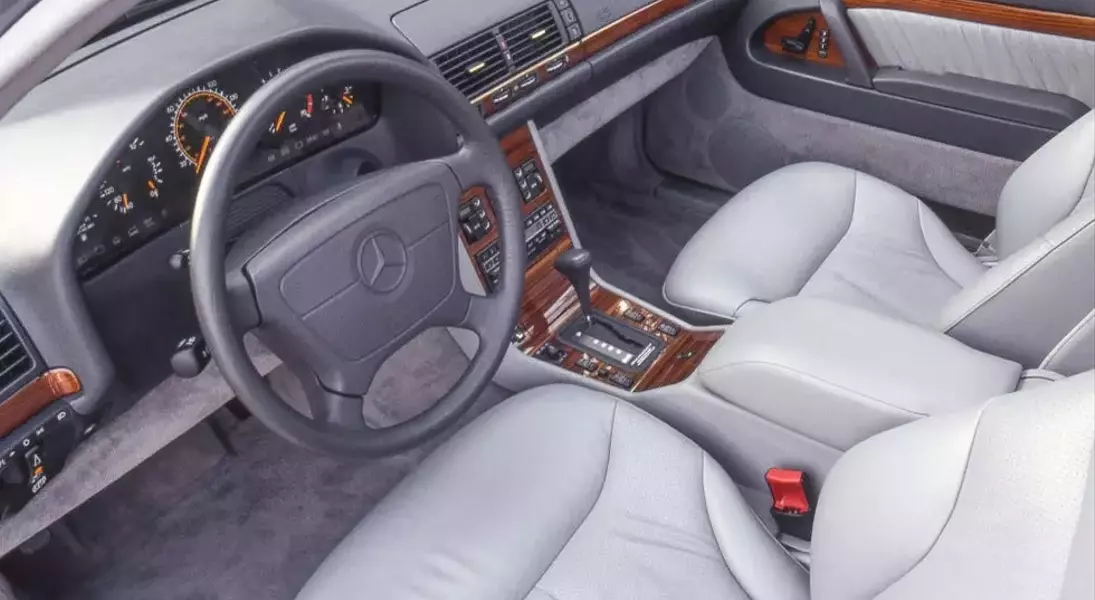
The 400SE’s design philosophy centered on integrating every possible enhancement for luxury, comfort, convenience, and safety, all while upholding traditional Mercedes virtues. Cruising on highways in the 400SE was described as a sublime experience. The seats, meticulously shaped and highly supportive, offered extensive adjustability, complemented by a power tilting-and-telescoping steering wheel. This combination ensured that drivers and passengers alike could find an optimal and comfortable position. The cabin’s tranquility was achieved through advanced sound insulation, featuring double-paned windows and rubber-isolated subframes that minimized noise and vibrations from the front and rear suspensions. This resulted in an exceptionally quiet and smooth ride, though it was noted that the 400SE was marginally louder than a Lexus LS400 under full throttle. Nonetheless, the vehicle delivered an unparalleled sense of comfort, whether navigating high-speed interstates or challenging urban roads.
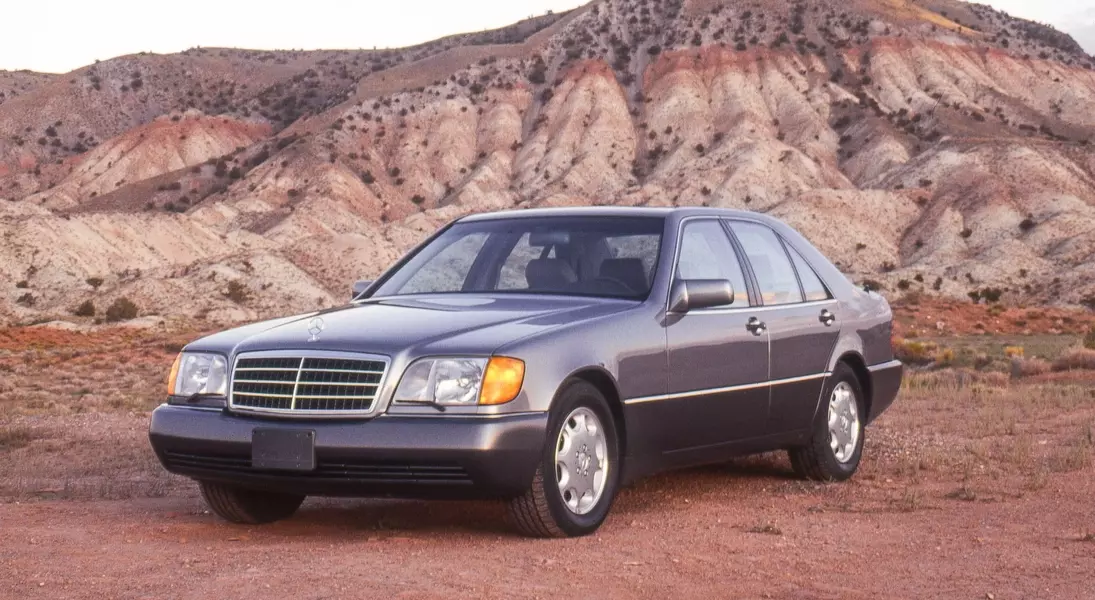
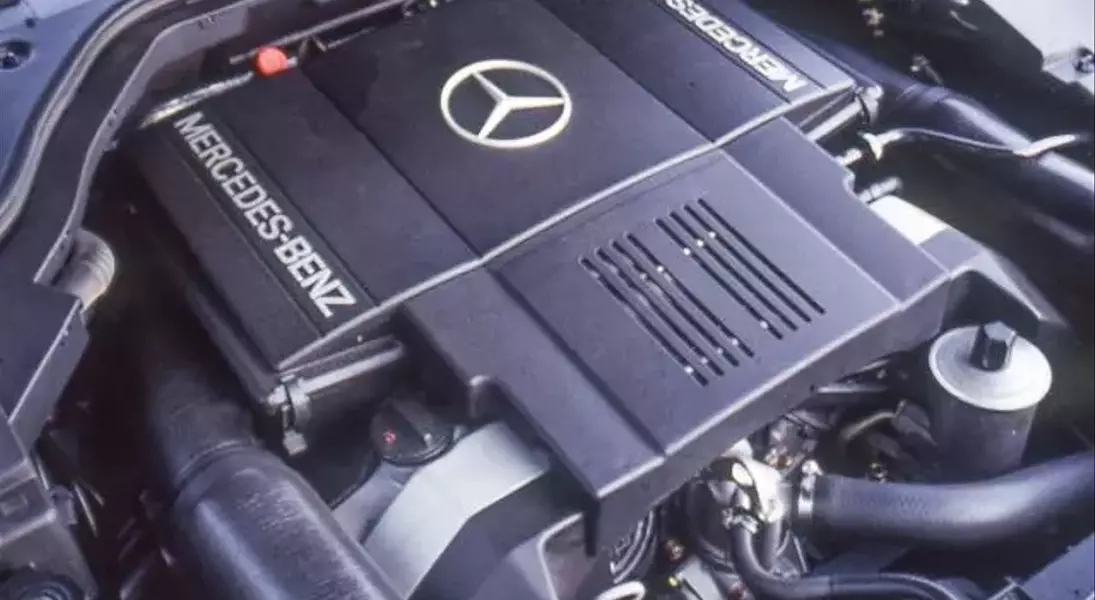
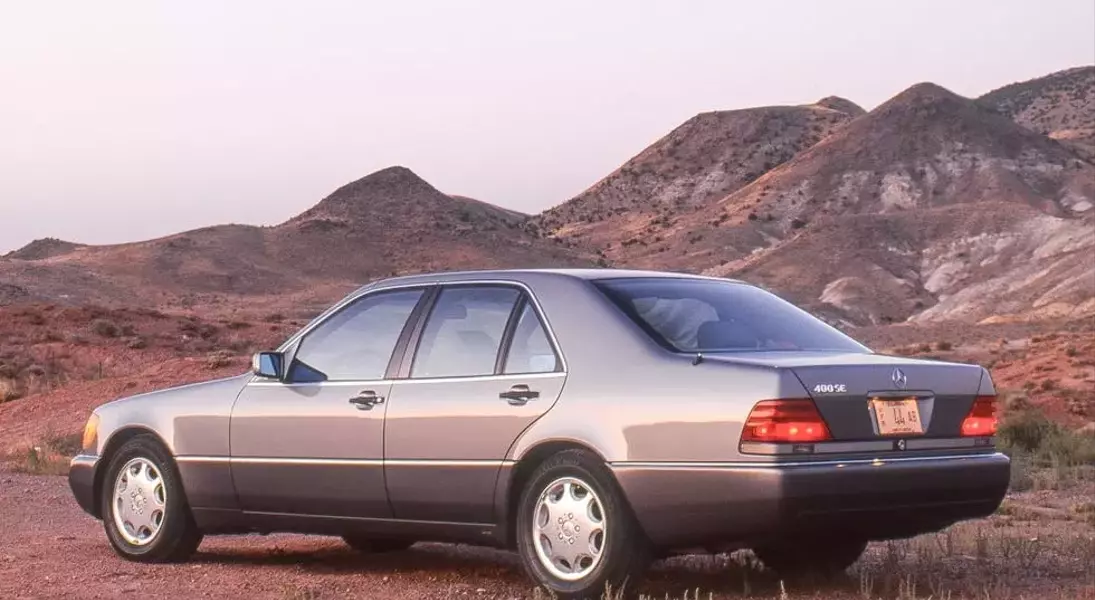
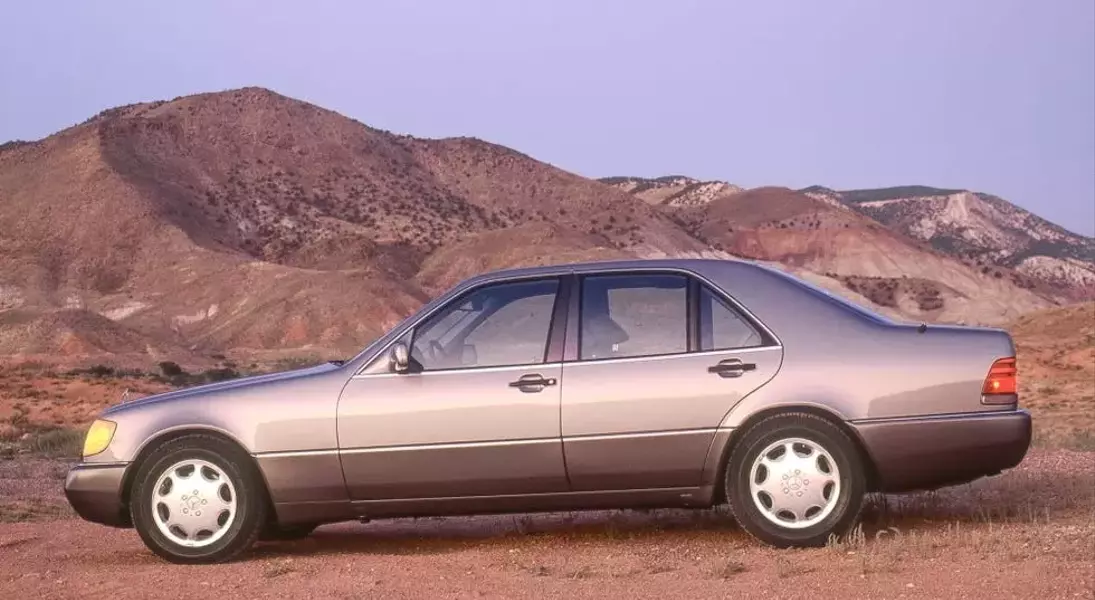
Such lavish comfort naturally came with a significant price tag. The base model of the 400SE was priced at $86,375, with optional features such as traction control, a ten-disc CD changer, and heated front seats pushing the total cost close to $91,000. It is worth noting that this price point was not for the top-tier model, as the 500SEL exceeded six figures, and the twelve-cylinder 600SEL was an additional $40,000. The 400SE's considerable weight of 4795 pounds, supported by 235/60ZR-16 Pirelli P600 tires, was a notable characteristic. This made it 895 pounds heavier than the older 420SEL and 687 pounds heavier than a contemporary Lincoln Town Car. Despite its height of 58.9 inches, the 400SE's length of 201.3 inches was surprisingly shorter than its predecessor and narrower than the Town Car, indicating that its mass stemmed from robust construction and a dense array of luxury, safety, and performance components rather than sheer size. While some found the weight to be a drawback, arguing that Mercedes-Benz's engineering prowess could have reduced it, the car demonstrated improved agility compared to previous S-class models. A smaller steering wheel offered more precise control, and the absence of throttle lag made the car feel more responsive. Powering this luxurious sedan was a new 282-hp, 32-valve 4.2-liter V-8 engine, which propelled the vehicle from 0 to 60 mph in 7.7 seconds and achieved a top speed of 151 mph, outperforming the Lexus LS400 in acceleration. The engine was lauded for its smooth and refined operation. The four-speed automatic transmission, while generally competent, exhibited some quirks, such as starting in second gear at light throttle and less seamless upshifts compared to some competitors. These transmission characteristics were partly attributed to efforts to improve fuel efficiency, a challenge for a large, heavy, and powerful vehicle. Projected EPA city mileage was 13 mpg, with observed figures around 15 mpg in typical driving, and an average of 18 mpg on longer journeys. The suspension system, despite offering a smooth ride, maintained excellent control over body motions, preventing excessive wallowing or bobbing even on challenging roads. However, when pushed hard during cornering, the 400SE’s weight became apparent, resulting in less skidpad grip (0.75 g) compared to rivals like the Infiniti Q45 or BMW 750iL.
Reflecting on the 1991 Mercedes-Benz 400SE, it is evident that this vehicle represented a pinnacle of luxury and engineering ambition for its era. The detailed examination reveals a car that prioritized an opulent and supremely comfortable driving experience, setting new benchmarks for interior refinement and ride quality. While its significant weight and cost were points of contention, they were arguably direct consequences of its extensive feature set and robust construction. The comparison with the BMW 750iL particularly highlights how different manufacturers approached the luxury sedan segment, with Mercedes-Benz leaning into ultimate comfort and solidity, and BMW emphasizing sportiness and dynamic handling. From a contemporary perspective, the 400SE serves as a fascinating case study in automotive design, demonstrating the lengths to which manufacturers would go to create a truly premium product. Its legacy is one of uncompromising luxury, solid performance, and an enduring sense of meticulous craftsmanship that continues to influence the automotive industry.
